

When ‘Alma’s Way’ returns on Monday, the Emmy-nominated PBS KIDS series arrives for Season 3 with stories rooted in history, identity, and everyday moments that help young viewers make sense of the world around them. From Black cowboy culture to hair as self-expression, the stories unfold amidst the vibrant backdrop of the Bronx.
Created by ‘Sesame Street’ alum Sonia Manzano and produced by Fred Rogers Productions, ‘Alma’s Way’ has always centered cultural specificity without flattening it into lessons. Manzano says that approach comes naturally when you’re committed to authenticity.
“The Bronx has so many different kinds of people in it,” Manzano said. “If we’re going to show an authentic place, we have to show the authenticity of all the people who live there.”
While the show’s main family is Puerto Rican, Manzano says the neighborhood itself demands a broader lens. “There’s so much happening there,” she said. “A lot of bodegas are run by people from Bangladesh, usually, as opposed to Puerto Ricans when I was a kid. But there are still bodegas. It’s rich, and we’d be fools not to take advantage of that.”
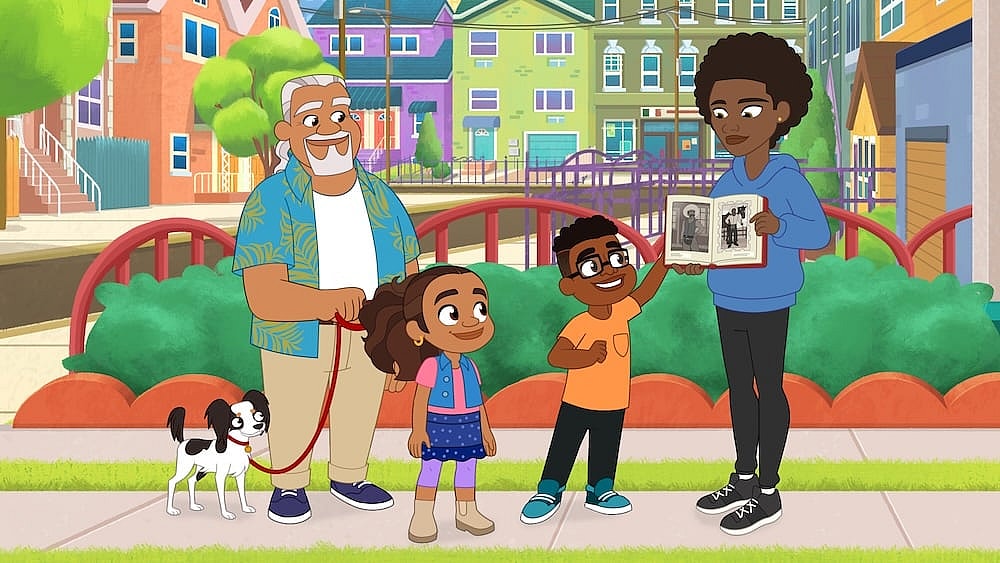
The Season 3 premiere episode, “Cowboy Howard,” reflects that commitment by introducing young viewers to Black cowboy history, a story that Supervising Producer Mia Olufemi says felt especially urgent right now.
“Sonia and I were talking when ‘Cowboy Carter’ came out,” Olufemi said. “There was so much conversation about who belongs in country and who doesn’t. I had also seen ‘NOPE’ by Jordan Peele, which got me interested in looking into Black people in the West. The first subject of a motion picture was a Black cowboy. A Black jockey.”
Growing up, Olufemi said, those stories were largely absent. “You never knew there were people of color in cowboy history,” she said. “That cowboys were typically Black, Indigenous, and Latino.”
To get it right, the ‘Alma’s Way’ team worked closely with Aisha McElroy of the Black Cowboy Coalition, who advised on the episode. Olufemi shared McElroy’s personal connection to the work.
“She wanted to be a Black cowgirl all her life,” Olufemi said. “She never thought she could be one because she never saw one until a Black cowboy rode past her house in West Oakland.”
That sense of access is central to the episode. “Howard reads about a historical figure, but then he actually gets to meet a cowboy in the Bronx,” Olufemi said. “That’s a reality kids can access.”
For Manzano, the timing felt right. “Cowboys are an idea whose time has come to be celebrated,” she said. “Children live in the same world we do. They don’t live in a fantasy world. They see what’s going on around them, and we want them to feel like they’re part of the society they’re born into.”
Notably, “Cowboy Howard” also reframes what cowboy culture looks like for kids. “When you think of cowboys, you think of gunslingers,” Manzano said. “That’s not the whole story. It was horsemanship more than anything else.”
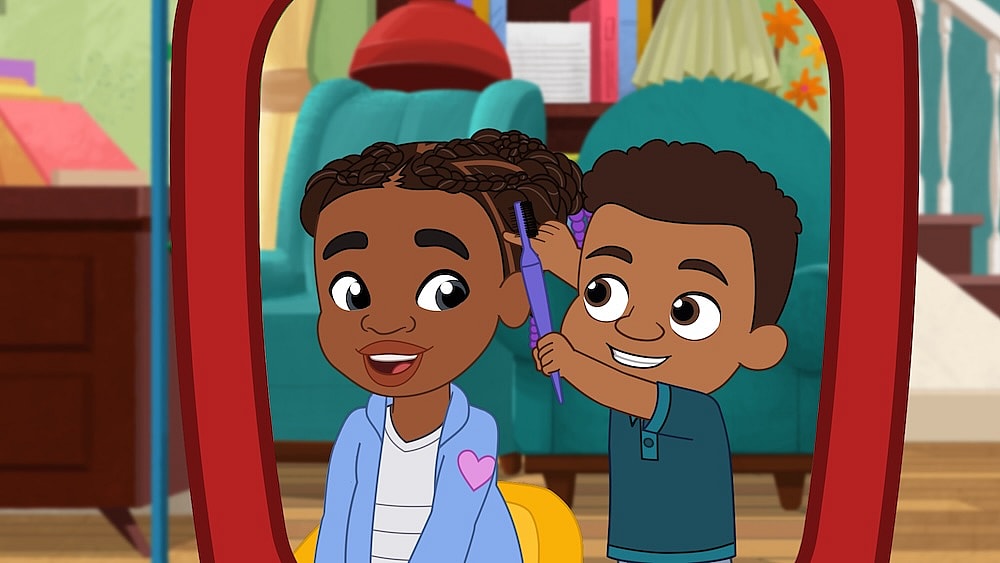
Another episode from the Season 3 premiere, “Junior’s Hair Salon,” brings that same care to conversations about hair and identity. The episode was inspired directly by Manzano’s own experiences growing up in the Bronx.
“My mother used to go to the beauty parlors,” she said. “You’d hear all the gossip, and then they’d shush you when you walked by.”
Those early experiences shaped how she later thought about representation. “When I first got on ‘Sesame Street,’ I didn’t know — should I leave my hair natural? Should I put in curlers?” she said. “The way I had my hair was so important because it represented me.”
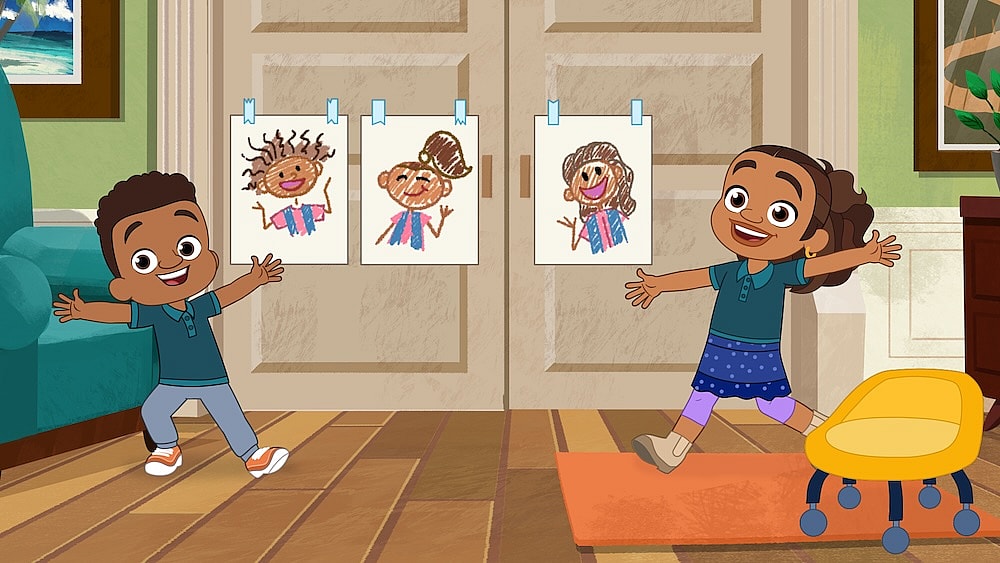
Olufemi says that message translates easily for young viewers. “Your hair is an extension of you,” she said. “It’s okay to notice differences. My hair does this, my friend’s hair does that. Both of those are good things. They’re things that we should talk about, and we shouldn’t be afraid of having conversations about that.”
Season 3 also allows ‘Alma’s Way’ to explore heavier topics with the same intentionality. Manzano shared that this season, the show will touch on housing insecurity in subtle ways. “Nobody’s sleeping on the street,” she said. “But there’s no heat in a building for a while, and the community comes together.”
Olufemi added that the season also addresses grief directly. “We will have a member of our beloved community pass away,” she said. “Kids have real questions. Can you be happy and sad at the same time? Is it okay to ask if your parents are going to pass away?”
Those conversations, she said, reflect a core belief. “Kids live in this world with us. They experience these things alongside adults, and they need support to navigate them… We’ll be providing engagement resources for parents to come back and talk to their kids after they’ve seen the episode.
As public media faces ongoing scrutiny, both Manzano and Olufemi remain grounded in purpose. “PBS is undergoing a lot of changes, but it’s prevailing,” Manzano said. “It might not be in the form that we’re used to, but it will morph into other forms of responsible programming.”
Olufemi is even more direct. “PBS is not going anywhere,” she said. “These are important stories that we need to tell. And there are companies like Fred Rogers Productions where our goal is really to make sure that every kid sees themselves in the media they consume. Fred’s messages were all about ‘there’s nobody else like you,’ ‘you are unique,’ ‘you are wonderful.’ ‘In times of strife, look to the helpers.’ These are all messages that kids and families need, now more than ever. As long as there is a television or a streaming device, we will find a way to tell these stories and make them free and accessible to kids and families throughout the United States.”
‘Alma’s Way’ Season 3 premieres Monday on PBS KIDS, with “Cowboy Howard” and “Junior’s Hair Salon” available to stream on the PBS KIDS platform and airing according to your local listings. The episodes will be available on January 26 on YouTube.