
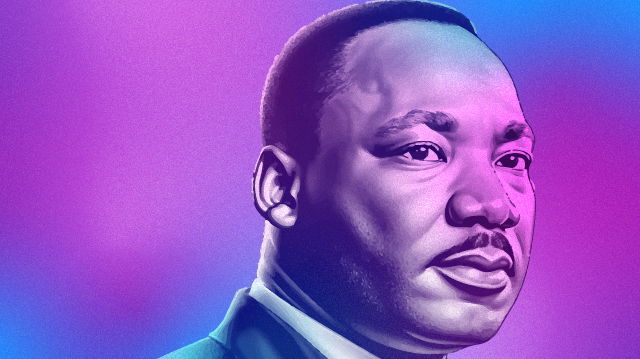
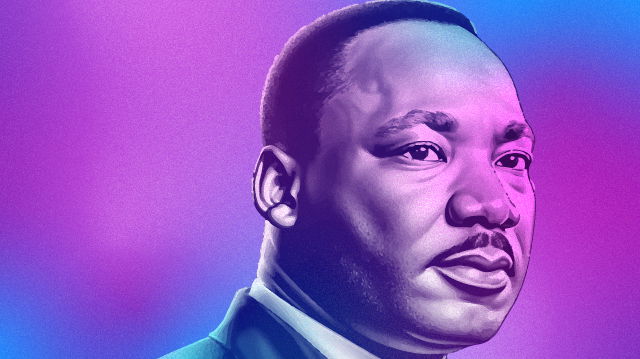
Forty years ago, after one of the longest legislative battles in modern U.S. history, the United States established the Martin Luther King Jr. Holiday, a national recognition not only of Dr. King’s leadership but of the moral force of the Civil Rights Movement.
That victory was not inevitable. It was won through persistence, protest, and the unwavering resolve of Coretta Scott King, who fought for 15 years to ensure her husband’s legacy would not be diluted, revised, or forgotten.
The movement to secure the holiday began almost immediately after Dr. King’s assassination in 1968 at the Lorraine Motel, which now stands as the National Civil Rights Museum. Coretta Scott King assumed the mantle of movement architect, ultimately the largest petition in U.S. history at the time, to demand that the nation honor a man who challenged its conscience. She built a broad coalition of citizens, artists, labor unions, clergy, and elected officials. She lobbied presidents and testified before Congress. She galvanized the public to see the holiday as a reflection of our highest democratic ideals.
Yet the fight was fierce. Opposition to the holiday revealed deep tensions around who is considered worthy of national memory. Critics masked their discomfort with King’s radical calls for economic justice, anti-war activism, and structural change behind arguments of cost or tradition. But the truth was clear: honoring Dr. King required the country to confront its own failures.
The holiday was ultimately codified in 1983 and first observed in 1986. By 2000, after additional state-level battles, it became a truly national observance. And yet, its establishment marked a beginning, not a conclusion.
Over the last four decades, MLK Day has evolved into America’s largest annual day of service. From food distribution to school cleanups, communities have embraced the idea that service is a powerful expression of shared humanity. But Dr. King’s call to service was inseparable from his call to systemic reform. He urged the nation to examine the roots of inequality, not simply to ease its symptoms.
Service without policy change is compassion without transformation. The commitment required today is to pair community service with civic action, advocacy, and accountability. Dr. King’s legacy requires both.
As we mark the 40th anniversary, we do so amid rising polarization, renewed attacks on voting rights, the censoring of historical truth, widening economic inequality, and a growing disconnect among generations. Young people, our most diverse and justice-driven generations yet, are navigating overwhelming social issues, disinformation, and activism fatigue. And still, they press forward, echoing the same courage by those who marched across the bridge in Selma, sat in at restaurant lunch counters, and challenged school admittance.
To uphold Dr. King’s legacy in the modern Civil Rights Movement, the nation must commit to the following:
• Protecting voting rights as the foundation of democracy.
• Defending historical truth, ensuring classrooms and museums remain places of honest learning.
• Advancing economic justice, echoing Dr. King’s final campaign for a more equitable and humane economy.
• Pairing service with advocacy, recognizing that meaningful change demands both local action and national policy.
• Centering community storytelling, lifting the voices of everyday people whose experiences deepen our understanding of the movement.
• Investing in young leaders who carry the creativity and conviction necessary to build the Beloved Community.
The 40th anniversary is a moment of celebration, but also a moment of clarity. The holiday affirms that America’s progress is not preordained. It is chosen repeatedly through civic courage, moral conviction, and collective action.
Dr. King taught that “the arc of the moral universe bends toward justice,” but he also insisted that it only bends when people pull together. The holiday stands as a national invitation to keep pulling.
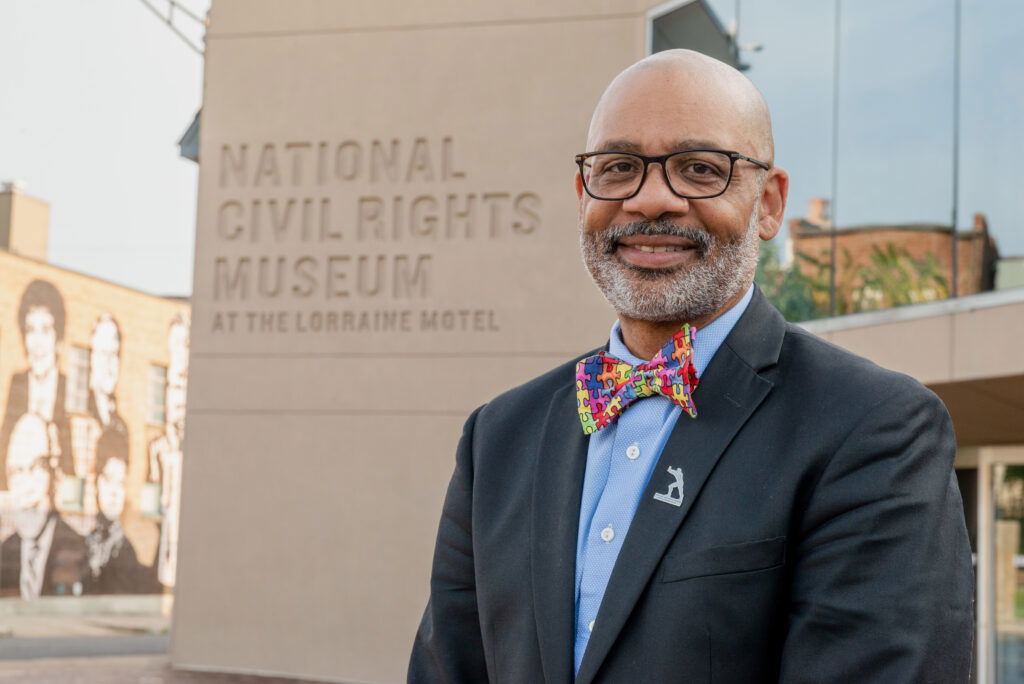
Dr. Russ Wigginton serves as the President of the National Civil Rights Museum. He assumed this role in 2021, and has vast experience in education, fundraising, operations, and community engagement. Wigginton was the Chief Postsecondary Impact Officer for Tennessee State Collaborative on Reforming Education (SCORE) from 2019-2021, where he led the organization’s work for postsecondary access, retention, and completion. He was vice president for student life and dean of students at Rhodes College in Memphis from 2017-2019, where he oversaw the college’s co-curricular experience for students.