

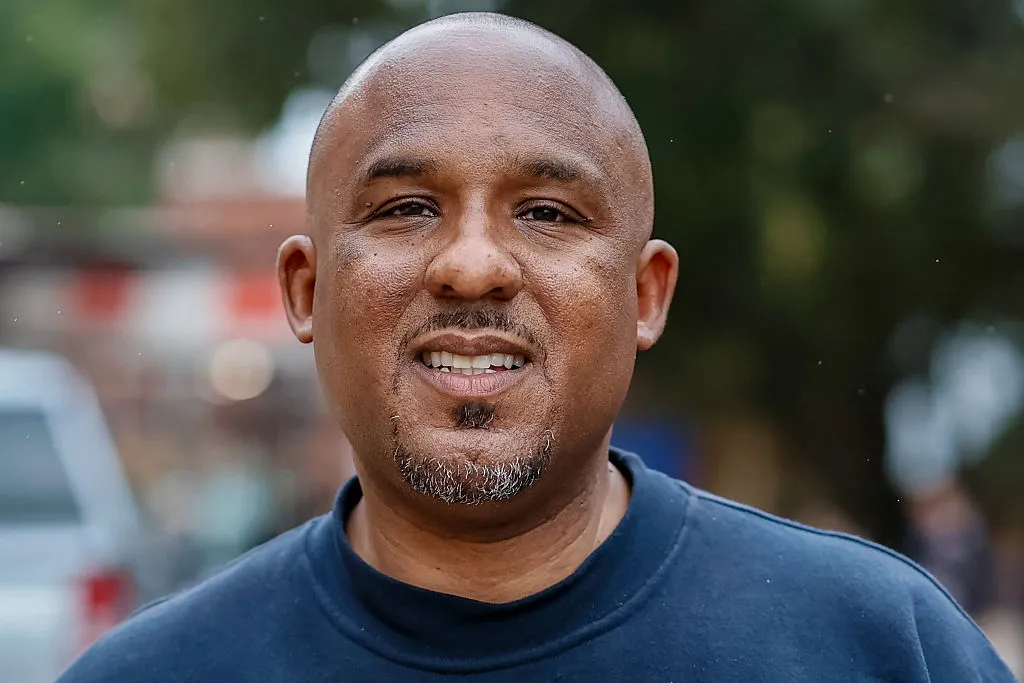
Can we all just take a moment to understand the historic moment unfolding in Mississippi? A Black man is fighting to become a U.S. senator from the state that racism built, and he just flipped a Republican stronghold named after the founder of the Ku Klux Klan.
Yes, you read that correctly. Scott Colom flipped Forrest County, named for Nathan Bedford Forrest, a Confederate general, slave trader, and the first grand wizard of the KKK. Apparently, even the county named after one of America’s most notorious racists wasn’t interested in keeping things the way they were.
With roughly 97% of the votes counted, Colom led Republican incumbent Sen. Cindy Hyde-Smith 54% to 44%, the Mississippi Free Press reports. That’s a 29-point swing toward Democrats in a county Donald Trump carried 58% to 40% in 2024.
And if Colom holds his razor-thin statewide lead, he would become Mississippi’s first Black U.S. senator since 1881, during Reconstruction.
The symbolism is difficult to overstate, particularly when you understand the history of Forrest County.
In 2020, residents voted on whether to remove a towering Confederate monument outside the county courthouse in Hattiesburg. The effort failed, 51% to 49%, despite roughly 85% of voters in the majority-Black college town supporting its removal. The monument, erected in 1910 by the United Daughters of the Confederacy, remains standing.
Across from it sits a monument honoring Vernon Dahmer, a local civil rights activist murdered after the KKK firebombed his home in 1966. His monument features his words: “If you don’t vote, you don’t count.” His wife, Ellie Dahmer, later served as a county election commissioner.
Hattiesburg was also a center of civil rights organizing during the 1960s. During Freedom Summer in 1964, its Freedom House hosted seven freedom schools teaching Black children subjects largely ignored by segregated Mississippi schools. Before that, Black voters faced absurd literacy tests, including questions like, “How many bubbles are in a bar of soap?”
So when Colom flipped Forrest County, he wasn’t simply winning votes. He was making history in a place where Black residents have spent generations fighting for the right to have their voices heard.
Some residents have even pushed to rename the county, suggesting it drop an “r” and become Forest County.
Maybe that’s a start. But on Tuesday, voters delivered a much louder message: Nathan Bedford Forrest’s name may still be on the county, but his politics don’t have to define its future.
SEE ALSO:
All Eyes On Mississippi And Alaska As More Democratic Upsets Loom
Angie Nixon Senate Run Reaffirms Power Of Black Progressive Politics
