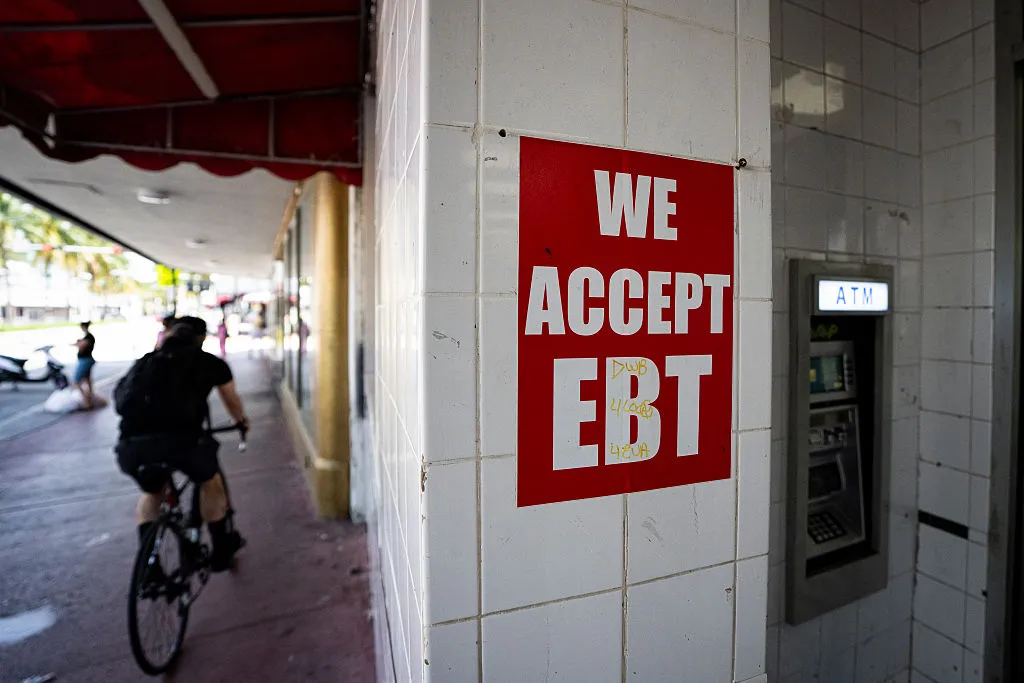



As the holiday shopping season approaches, rising prices and shrinking disposable incomes are squeezing Black families living paycheck to paycheck.
According to 2024 research data, 76% of Black consumers live paycheck to paycheck, with half reporting less than $500 in savings. Recent consumer tracking from Numerator’s 2026 spending outlook underscores ongoing pressure, showing that 78% of Black shoppers find non-essential items harder to afford as rising prices remain a top financial concern.
To manage this seasonal strain, cash-strapped consumers who used to rely on holiday layaway plans offered by major retailers are now turning to companies like Affirm and Klarna, short-term point-of-sale financing providers that often charge high interest rates and other fees.
Layaway plans used to offer shoppers the opportunity to secure an item by making a small initial deposit, followed by interest-free installments over several weeks or months. The retail store held the physical merchandise in the back room or warehouse, and the consumer took possession of the goods only after fulfilling the total payment schedule.
Over time, retailers have phased out these programs and instead turned to companies like Affirm and Klarna to provide direct installment loans at checkout. These platforms only require a soft credit check through a smartphone app, splitting the total balance into four automated payments deducted from a debit card every two weeks.
Under traditional layaway, if a customer abandoned their payment schedule, the retailer had to return the item to the shelves, often missing the peak holiday shopping window. With digital platforms, the financing provider assumes 100% of the default risk. The retailer is paid the full purchase price upfront, minus the processing fee, immediately upon transaction approval.
Industry data indicates that the processing fee for retailers is negligible, as this checkout option lifts average order values by 30-85% compared with standard payment methods. Retailers also experience a 20-30% increase in checkout conversions when offering installment loans compared to traditional payment methods.
Consumers embrace these services because they eliminate the multi-week delay of layaway, allowing shoppers to take gifts home immediately without needing a standard credit card or a formal banking history. Federal Deposit Insurance Corporation data shows that approximately 10% of Black households lack a checking or savings account compared to 1.9% of white households.
Federal Reserve data indicates that Black applicants face credit rejections at twice the rate of white applicants. By accepting basic debit cards, prepaid cards, or digital wallets, platforms like Affirm and Klarna provide an alternative credit gateway for consumers who face systemic exclusion from mainstream banking networks.
Failing to keep up with the installment loans can become costly. If the consumer fails to pay off the balance, they can face late fees of up to $7 per missed installment on platforms like Klarna and up to 36% APR on extended payment plans.
When a linked checking account lacks enough funds to cover a scheduled bi-weekly payment, the failed automated debit triggers bank overdraft penalties. Bankrate data shows that 94% of checking accounts still charge these fees, while a Motley Fool Money analysis notes that typical fees at major banks reach $35 and 25% of Black Americans paid an overdraft fee over the past year, more than double the 12% national average. Unpaid accounts can also be frozen, turned over to debt collectors, and reported to credit bureaus, leaving a negative mark on a borrower’s credit report for up to seven years.
Data from the Federal Reserve Board’s annual Survey of Household Economics and Decisionmaking highlights a distinct demographic reliance on these new digital platforms, revealing that Black adults account for 29% of buy-now, pay-later users despite representing a smaller share of the overall population.
Persistent price increases on everyday essentials mean consumers are expanding their use of financing tools to include purchases from grocery aisles. Research from the Urban Institute indicates that nearly 1 in 10 working-age adults use these installment services to buy food, with a LendingTree tracking survey showing that grocery financing via these platforms has reached 29% of these users, up from just 14% two years ago.
This financial bridge comes with heavy backend costs for households already managing thin savings. The LendingTree data indicates that 47% of buy-now, pay-later users made at least one late payment in the past year, up from 41% the prior year, and 54% of respondents state they need the loans simply to make ends meet. While automated billing keeps baseline defaults low, late penalties and multi-app debt stacking quickly penalize the budget of cash-strapped shoppers.
The reliance on short-term point-of-sale credit intensifies as the holiday shopping window opens. Holiday usage has scaled aggressively year over year, with Adobe Analytics tracking reports showing that buy-now, pay-later spending cleared a $20 billion milestone during last year’s holiday season. Building on that momentum, Adobe Analytics projections estimate that installment volume will grow 7% and hit a record $21.3 billion this season, capturing nearly 8% of all online holiday purchases.
The surge in digital borrowing arrives as overall holiday costs remain elevated. Wells Fargo Agri-Food Institute figures confirm that a traditional 10-person Thanksgiving dinner dipped by about 32 cents from last year to $78.93, which is roughly $30 more, or 61% higher than the $48.91 price tag in 2019.
Furthermore, retail data from PwC’s Holiday Outlook shows that average gift spending is expected to stay highly elevated at $708 per shopper, forcing nearly 45% of shoppers to plan on buying fewer gifts to stay within their budgets. For consumers relying on Klarna or Affirm to bridge this gap, financing these higher prices means monthly payment obligations will expand significantly, locking families into repayment schedules well into the new year.
While Klarna and Affirm make transactions fast and convenient, the long-term costs accumulate quickly. Safer alternatives do exist, such as credit union holiday savings accounts, which allow shoppers to build up cash savings for holiday spending through small monthly deposits before the shopping season begins. Because money in savings accumulates on the front end, this approach eliminates interest charges, late penalties, and mandatory payment schedules.
For unbanked consumers locked out of the financial mainstream, a credit union is rarely an option. Without access to traditional savings options, these shoppers face limited financial choices. The convenience of checkout buttons, combined with the automated debt cycles that come with them, brings a sobering financial reality for many families. The cost of filling Santa’s sleigh this year will linger long after he’s returned to the North Pole and the holiday decorations are taken down.
SEE ALSO:
When People Have To Use Affirm To Pay Rent, Things Are Bad
Millions Of Americans Taking On Credit Card Debt To Pay For Groceries