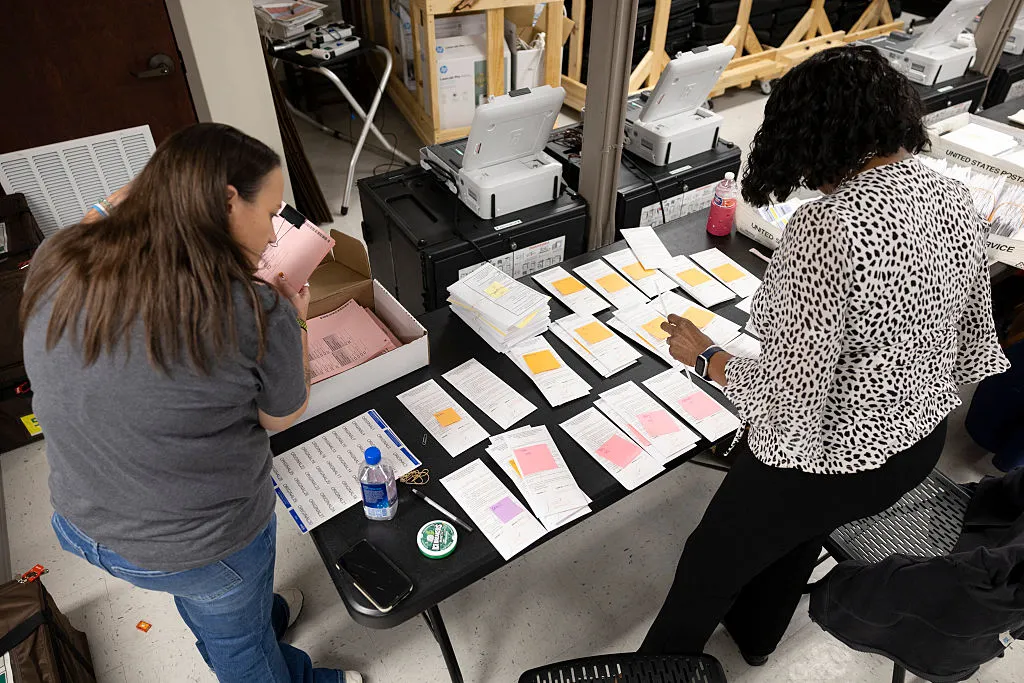

So, we all know that Republicans suffered a massive blowout during the midterm elections this month. It has been a sad time for the MAGA world, and a wonderful time for everyone who wanted to see that movement defeated. While polls consistently predicted a blue wave, they underestimated how thoroughly the other side would lose. Roughly 94% of counties across the U.S. shifted blue compared to the 2024 elections. Jurisdictions in all 50 states reported an average 13-point shift toward Democratic House candidates, and not a single one showed an overall shift toward Republicans in the House. Republicans also lost seven seats to Democrats in the U.S. Senate.
Yes, it was bad for Team Red. Horrible, actually.
But what if I told you it could have been worse? What if I told you Democrats may have flipped even more races if not for establishment Democrats who are far too married to the idea that progressives are too far left to be electable, and moderates are still the ones who control the party?
And, look, according to CNN, moderate Democrats did fare better than their progressive counterparts this election cycle — but did it have to be that way?
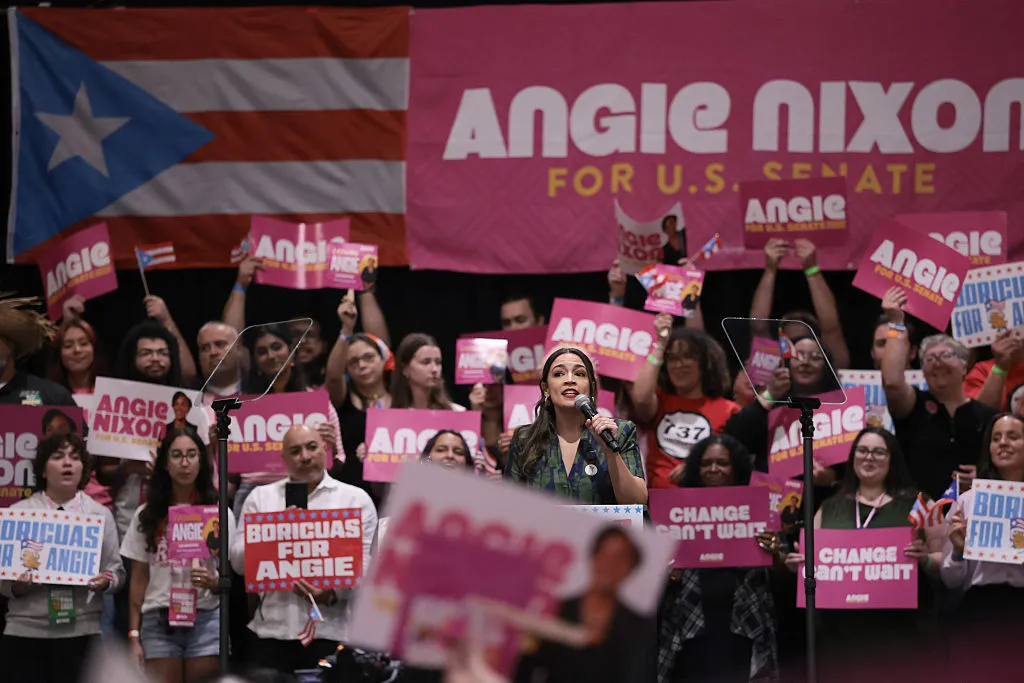
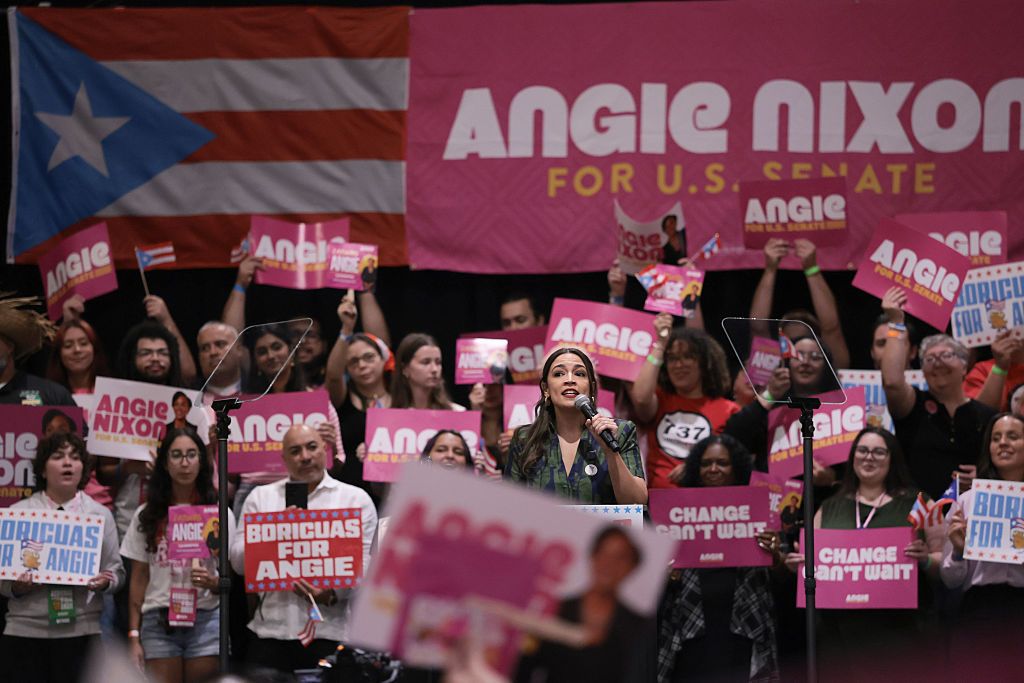
Take, for example, Angie Nixon in Florida, a state that remained a red spot in the bluetopia that the U.S. became on Nov. 3. In the state that could arguably be viewed as the Black history-hating capital of the nation, Nixon only lost her U.S. Senate race to GOP incumbent Rep. Ashley Moody. According to Axios, Democrats haven’t won a Senate race in Florida since 2012, and Republicans outnumber Democrats by 1.5 million registered voters. Yet, Nixon only lost by about two points.
In a midterm race where Democrats were dominating their Republican opponents by double digits in some races, such as Senator-elect James Talarico, who decimated Republican Ken Paxton to become the first Democratic Senator to be elected in Texas since the late 1980s, Nixon, who was considered one of the longest of longshots to win, was only narrowly defeated.
Imagine what she might have done if the Democrats who controlled the money funded her properly.
Back in September, Nixon told MS NOW that she made a phone call to Senate Minority Leader Chuck Schumer, hoping for help funding her race, a request that every candidate poses to their party’s leader. She said his answer was noncommittal.
“When I did speak with Sen. Schumer on the phone, it was basically a ‘we will see,’” Nixon said. He’s going to look into it. That’s what was said, that he’s going to look into it.”
Now, a spokesperson for the Democratic Senatorial Campaign Committee told the network at the time that it was ” excited about opportunities to expand the map further and monitor all races closely, including Florida, where Angie Nixon is running an energetic campaign.”
OK, but where was the committee’s energy? Did it match Nixon’s?
According to her, nah.
From MS NOW:
Nixon, a state representative from Jacksonville, won Florida’s Democratic Senate nomination last month in an upset. Her account offers a rare look at how national Democrats are handling a nominee who started as an insurgent, running against the same party establishment that now controls the purse strings.
Nixon and Schumer have yet to have an official meeting in person, though they saw each other last week at an event and spoke. “We are working on a sit-down,” Nixon told MS NOW. “I have talked to some of his staff.”
Asked whether the national party was doing enough to help her win, she was measured but direct: “They could do a lot more.”
Nixon has two explanations for why she believes party leaders are holding back. The first is ideological.
“I am a progressive Democrat, and I am very vocal about putting working-class families first. I am very vocal about progressive values,” she said. “So I think that may be the main issue.”
The second is her race and gender. “Folks are a little gun-shy because, unfortunately, Vice President [Kamala] Harris lost as a Black woman, and so people are being very hesitant in terms of funding Black women, especially in the South.”
So, here’s what gets lost in all these conversations about whether Democrats should start leaning toward what people call the “far left,” or whether they should promote more moderate candidates so as not to alienate moderate and independent voters: there’s actually room for everyone at that table. Why would the party not just let a Democrat’s popularity with voters speak for itself, regardless of whether that candidate represents where establishment Democrats envision the party’s general direction?
Even when it comes to winners like Sen-elect Abdul El-Sayed — who had to grapple with the onslaught of bigoted Republicans and right-wing media outlets trying desperately to establish imaginary ties between him and Islamic extremism — Democrats seemed nervous about throwing their lot in with him until he became too popular with the base to deny his viability. Yet, El-Sayed beat Mike Rogers by seven points, which he predicted would be the outcome.
And it’s not just establishment Democrats who seem to have a problem staying out of their own way. Earlier, I noted that CNN reported that moderate Democrats did better than progressive democrats in terms of the margins they won by. The article I cited was titled, Midterm returns show bad news for progressive Democrats. But why frame it that way? Mind you, this was an article about all the Democrats, moderate and “far left” alike, who won their races. What’s with this narrative that if progressives didn’t beat their opponents down as badly as moderate Dems did, that’s an indication that the party just isn’t ready to shift that far to the left, especially considering the difference in the way many of these candidates were funded?
This isn’t to say that if Nixon won, Florida would have been added to the list of states that miraculously turned blue, but Democrats would have had meant Democrats would have been looking at 55 Senate seats to Republicans’ 43, instead of its 54-44 lead, and that’s still something.
Again, it was a blowout either way you slice it, so this might seem like a petty gripe that isn’t worth griping, but there are other elections to consider in the future, and considering the blue tsunami was shocking for everyone, regardless of what the polls were saying leading up to it, perhaps one lesson to take from it all is this:
If the established Democratic Party just stops kneecapping itself out of some out-of-touch fear that going too far left will lead to its downfall, there’s no telling what the political landscape looks like in 2028 and beyond.
The midterms proved, if nothing else, that the nation is no longer nearly as conservative as we once thought. Why fight that?
SEE ALSO:
Angie Nixon Senate Run Reaffirms Power Of Black Progressive Politics
A Black Man Just Flipped A Mississippi County Named After KKK Founder