
With “Stranger Things,” there is a clear before and after: B.E. and A.E.—before Erica and after Erica.
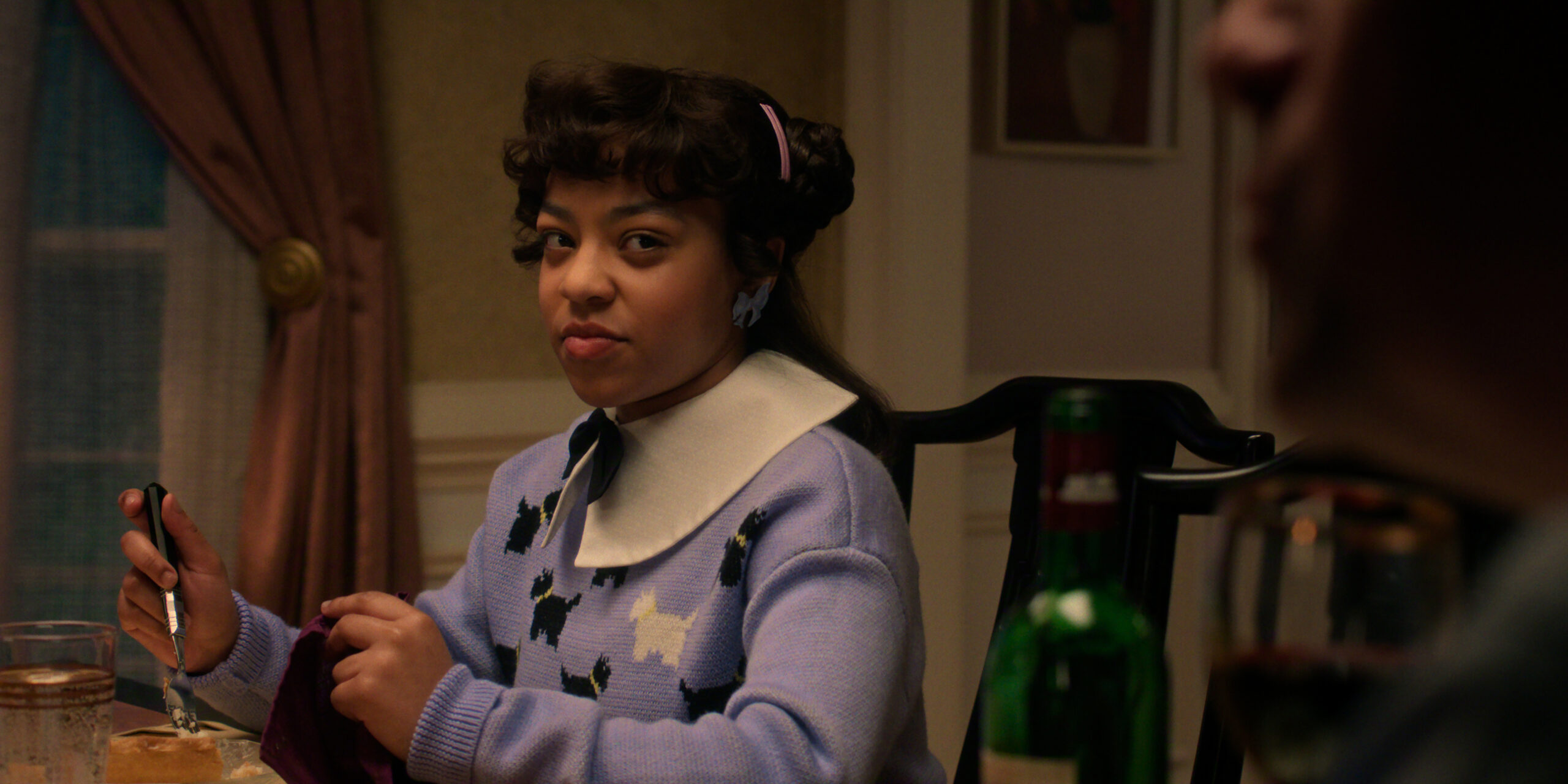
Erica Sinclair arrived in season two and instantly stole the show. As Lucas’s wisecracking, no-nonsense little sister, she was quickly crowned one of the most iconic little sisters in television history. Played expertly by Priah Ferguson, Erica’s role only grew with each season. She wasn’t just comic relief; she became integral to the plot, as essential to saving the world as many of the show’s core characters—if not more so.
And yet, when the story that follows her older brother (played by Caleb McLaughlin) and his friends—as they battle the evil forces at play in a secret supernatural mystery involving parallel dimensions plaguing their town—finally ends, Erica all but disappears.
After the final showdown and resolution, during the show’s closing moments, we’re given almost nothing of her future. She pops up briefly at her brother’s graduation to set off confetti cannons, but that’s it. No real sense of closure. No glimpse of growth. No understanding of how everything she experienced shaped her, despite the fact that younger characters who appeared much later are afforded precisely that care.
Instead, we’re left with questions. What did all that trauma do to her? How has her relationship with Lucas evolved after surviving literal apocalypse-level events together? Did he finally hand over his action figure collection? We’re shown his white best friends’ futures—college, writing careers, forward momentum—while Erica’s story simply… stops. And it’s hard not to notice that contrast.
When asked about Erica’s ending, one of the Duffer brothers, Ross, offered a response that was, at best, troubling.
“Obviously, no one’s concerned about Erica,” he said.
He went on to add, “She can take care of herself. She’s gotta go through high school now, but she’s just so tough.”
But Erica is a child. She quite literally cannot “take care of herself.” She isn’t “tough”—she’s a child who was repeatedly placed in danger, asked to be brave beyond reason, and expected to survive it all without consequence. And plenty of people are concerned about Erica: about her mental health, her safety, and the ending she was denied.
There’s also the larger context the show never reckons with. Erica and Lucas are Black children growing up in the 1980s, living in what was once the epicenter for the Ku Klux Klan. That history matters. It shapes the world they inhabit and the people they become. If we care about legacy, then we have to care about what kind of woman emerges from that childhood—and what stories we allow her to carry forward.
Erica deserved an ending worthy of everything she survived.
One popular fan theory imagines her eventually landing in the DMV, working for NASA. It fits. Erica would absolutely graduate high school early, attend Spelman College or a similar historically Black college or university, then move on to MIT to deepen her work in math and science. Maybe she’s running NASA and living in Bowie, Maryland, with her family. Or maybe she’s leading another country’s most prestigious space program. Maybe she becomes a writer. Whatever the specifics, the point is that her brilliance should take her somewhere.
Her inclusion in “Stranger Things” mattered. Black kids rarely get to ride the dragon, travel through space, or be central to epic adventure stories. For Black girls who grew up watching these stories and never seeing themselves reflected, Erica was a balm. For future generations, she was a promise.
And it’s bad form to break a promise.
When Ferguson spoke to theGrio ahead of the series finale she revealed why she thinks Erica resonated so strongly with so many viewers.
“Erica says what people are thinking, which people love,” she said. “She comes in at the perfect time when there’s confusion going on and says what everyone’s thinking. She’s also very confident and nerdy, which you don’t see often—especially with girls on TV. I think that really spoke to people.”