
This week, pastor Phillip Anthony Mitchell made headlines for gathering 80,000 people for an hour of prayer at AT&T Stadium in Texas. In the days that followed, Mitchell, who founded the 2819 Church in Georgia, has made several media appearances to discuss the event and his upcoming book, “Contend,” including a stop at Fox News.
His appearance on the notably conservative news broadcast quickly sparked debates on social media as users questioned his motives and intended audiences. However, while Mitchell’s name is in the hot seat, the discourse points to a larger pattern and issue both theologians and activists have observed. Activist, host and executive producer of the “Undistracted” podcast, Brittany Packnett Cunningham explained that the discourse around Phillip Anthony Mitchell goes beyond the 2819 preacher in a conversation with theGrio.
“Philip Anthony Mitchell is just an emblem of a much, much, much deeper problem,” she said. “He’s not the virus. He’s the symptom.”
“We’ve been noticing a trend, in particular, to undermine the power of Black institutions, in part through putting a shiny veneer on white evangelical theologies to appeal to Black people, who once upon a time would have helped fuel the Black Church as both a religious institution, but also as a socio-political institution,” she added.
Though the role Christianity plays in the advancement of Black communities has and continues to be debated by activists, the Black Church has been a space of resistance, or as Dr. Jamar Tisby describes it “a force for liberation,” that has helped the fight to protect civil rights, voting rights, access to quality education, housing, and more.
“That institution is not perfect, but it has been absolutely essential to our ability as a community to fight for, win, and protect our rights throughout American history,” Cunningham said.
Some argued the backlash Mitchell has faced is overblown and that faith should be kept separate from politics. Others saw it as part of a broader shift in where, and how, Black Christians worship. A recent Brookings study highlighted how where Black Americans worship can affect their political views. According to Ryon Cobb, the research author and assistant professor at Rutgers University School of Social Work, Black members of predominantly white congregations were more likely to lean Republican, while many Black members of multiracial congregations appeared largely disengaged from either party. Packnett Cunningham described the process as a “pipeline” that appears through seemingly pure movements of racial reconciliation. This pipelining also appears in musical shifts away from traditional gospel, which long held a mission of empowering communities, via churches dropping affiliations with A.M.E., COGIC, or National Baptist denominations that shaped Black liberation theology, in favor of a nondenominational identity.
“Every single time, they are preaching a depoliticized, well, a seemingly depoliticized theology, but it’s actually deeply politicized,” she explained. “It’s politicized toward the right. It’s not politicized toward social justice.”
“There is no possibility of an apolitical religion,” Tisby, a historian of race and religion, added. “There is no way to remove yourself from politics by not talking about it because your silence is political. Your silence does not support the oppressed; it supports the oppressor.”
Tisby notes that the line between “political” and “religious” has long been drawn selectively. Historically, he explains how the white power structure deemed slavery, segregation, and Black political rights too political for the pulpit, but had “no such reservations” about war, abortion or same-sex marriage. Still, he draws a distinction between being political and being partisan. Faith leaders, he said, need not endorse a party, but they cannot opt out of politics altogether, pointing to religious and political leaders like Charles H. Pearce, who said a minister “cannot do his whole duty” without looking out “for the political interests of his people.”
Packnett Cunningham made a similar point about what defines the Black Church. “It’s not that every church that has Black people is a Black church,” she said. Rather, she said, any church led by Black people “that concerns itself intentionally with the socio-political well-being of the Black community in America is a necessary part of that institution.”
Tisby framed that commitment as a duty of the pulpit. “It is a pastoral responsibility, when you are serving a historically marginalized and oppressed people, to worry about the laws and the policies that are the source of so much of their suffering,” he said.
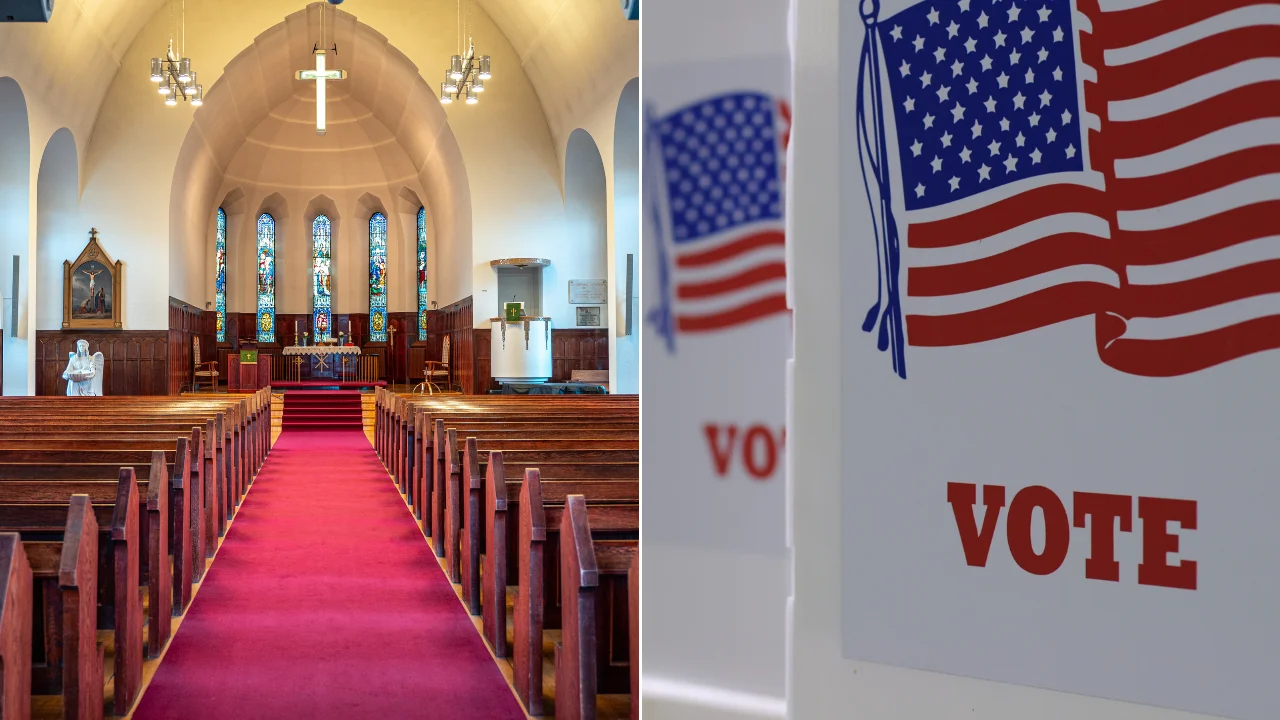
As communities prepare to vote in the midterm elections, both argue that for Black Americans, faith and politics have never been fully separate, and can’t afford to be now.
TheGrio has reached out to Philip Anthony Mitchell and 2819 Church for comment and has not received a response at the time of publication.