
By United News Staff
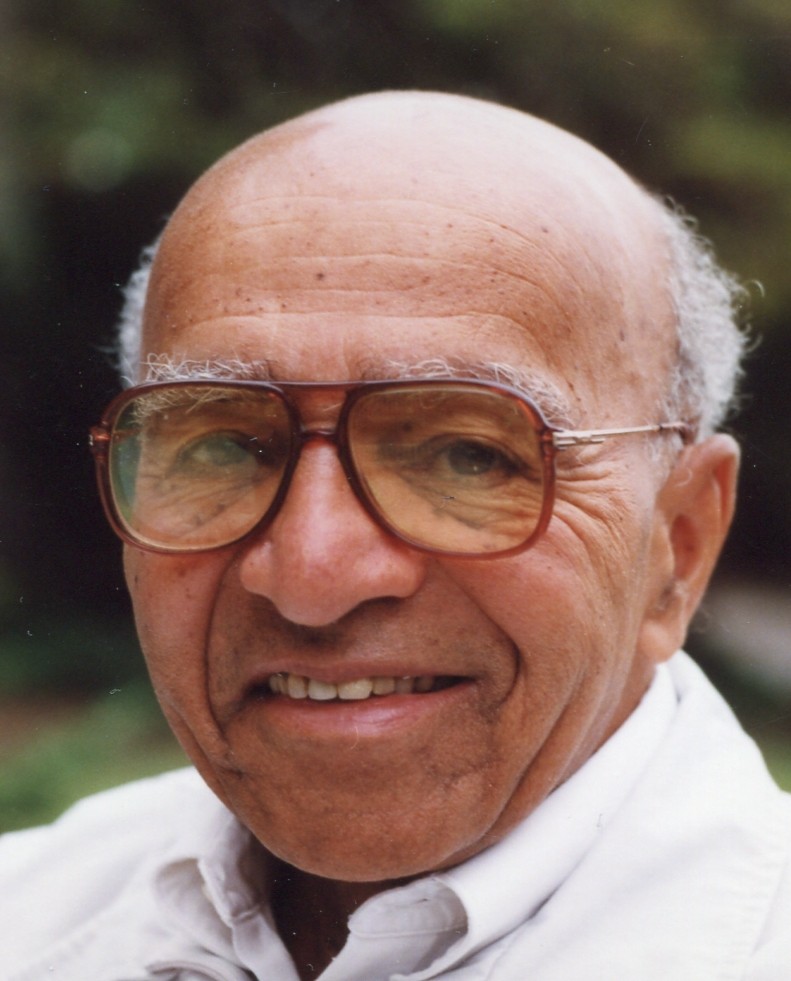
When NVIDIA unveiled its newest generation of artificial intelligence processors in 2024, the company chose a name that honored one of the most brilliant mathematical minds of the twentieth century. The Blackwell AI chip architecture is named after David Harold Blackwell (1919–2010), a pioneering American mathematician and statistician whose work laid the intellectual groundwork for modern artificial intelligence.
Blackwell’s story is more than one of academic achievement—it is a story of intellectual resilience. Long before computers could learn patterns or make decisions, Blackwell was developing the mathematical logic that would allow machines to think.
Blackwell’s story is more than one of academic achievement—it is a story of intellectual resilience. Long before computers could learn patterns or make decisions, Blackwell was developing the mathematical logic that would allow machines to think.
A Spark That Ignited a Brilliant Mind
Blackwell was born on April 24, 1919, in Centralia, Illinois. The eldest of four children, he grew up in a modest household. His father worked for the railroad and his mother was a homemaker. Neither parent had completed high school, but curiosity and determination filled the home.
The spark that changed his life came from his grandfather’s small library. Among the books was an algebra text that captured his imagination. The logic of mathematics fascinated him, and that fascination quickly grew into mastery.
Blackwell was born on April 24, 1919, in Centralia, Illinois. The eldest of four children, he grew up in a modest household. His father worked for the railroad and his mother was a homemaker. Neither parent had completed high school, but curiosity and determination filled the home.
The spark that changed his life came from his grandfather’s small library. Among the books was an algebra text that captured his imagination. The logic of mathematics fascinated him, and that fascination quickly grew into mastery.
At just 16 years old, Blackwell entered University of Illinois Urbana-Champaign. His academic rise was remarkable. By age 22, he had completed his bachelor’s, master’s, and PhD in mathematics. When he earned his doctorate in 1941, he became only the seventh African American in the United States to receive a PhD in mathematics.
For the complete article, Subscribe to the UniteNews Magazine. 25$ for one year.