
As last week’s midterm elections revealed, Americans are struggling deeply with the cost-of-living crisis. Recent analysis has shown how the issue is worsening, with nearly a quarter of Americans behind on their debt.
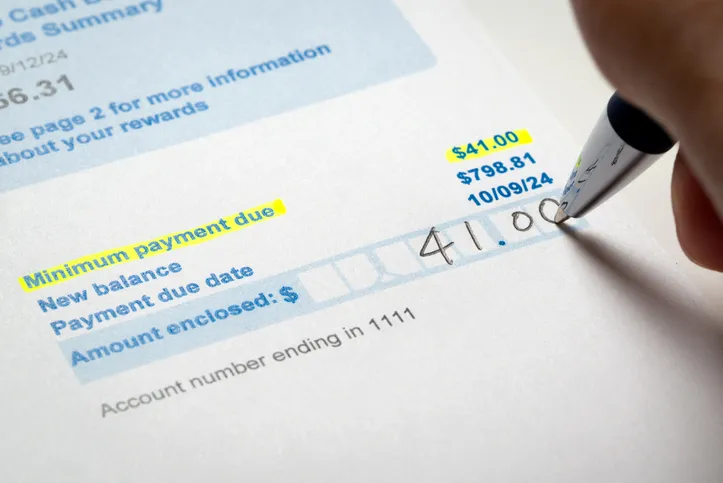
CBS News reports that a report from the Urban Institute found that 24% of Americans who have a credit report are behind on their debt, with a median collections balance of $2,913. This number goes out for predominantly Black and brown communities, where 30% of people are behind on their debt, with the median collections balance being $3,009.
Sadly, this news isn’t all that surprising if you’ve been following the economy throughout the year. A growing number of people have been relying on credit cards to simply pay for groceries. As a result, household debt has continued to increase, and more people are falling behind on payments for their auto loans, credit cards, and student loans.
“The increasing cost of living makes it harder for people to make payments on basic needs,” Breno Braga, senior fellow in the family and financial well-being division at the Urban Institute, told CBS News.
Rising consumer debt also hasn’t been helped by the Federal Reserve’s attempts to tame inflation by raising interest rates.
From CBS News:
Consumers’ credit card balances have surged to a record $1.29 trillion, up nearly 70% from five years ago, according to new figures from the Federal Reserve Bank of New York.
Years of high prices have forced Americans to deplete their savings and finance their daily expenses with debt, according to Ted Rossman, principal consumer finance analyst at Money Management International, a nonprofit debt counselor. As a result, many household budgets are at a “breaking point,” he said in an email to CBS News.
Consumer prices have risen by an average of 30% since 2019, Rossman noted. Meanwhile, the share of Americans with debt in collection this year is up about one percentage point, from less than 23% in 2025, according to the Urban Institute, which based its findings on an analysis of more than 10 million credit records and U.S. Census data.
Medical debt is one of the core drivers of why people are behind on their debt. The Urban Institute found that 3% of Americans have some form of medical debt, with the median balance being $1,492. While it’s predictable that people without health insurance have medical debt, the rising cost of deductibles and healthcare has also resulted in people with health insurance having a significant level of debt.
“People without health insurance are more likely to have medical debt, but having coverage does not protect you at all from having medical debt, especially not now with the high deductible plans we are seeing,” Braga said.
Medical debt and the skyrocketing costs of healthcare being one of the core reasons feel like the economy isn’t working for them is only further evidence that Congress needs to seriously consider proposals like Medicare for All, or at the very least reinstating insurance subsidies provided through the Affordable Care Act.
It feels like we’re all in the same Catch-22. A significant number of people aren’t making enough money to keep up with the rising cost of living, but the job market is so poor that trying to find another job that pays better feels like squaring up to a Dark Souls boss; you’re going to fail a lot, and maybe after the 57th try you’ll make some progress. Employers don’t even deny you a promotion or a raise anymore; they just look at you like this.
Democrats overwhelmingly won the midterm elections, flipping deep red states and establishing a decisive majority in Congress. As more data reveals how bad the economic prospects are for the average American, it’s abundantly clear that Democrats need to quickly get to work addressing the cost of living when they take control of Congress this January. It’s going to be a complex road, and it will likely take a lot of time for meaningful change to be enacted, but it’s clear something needs to be done.
SEE ALSO: