
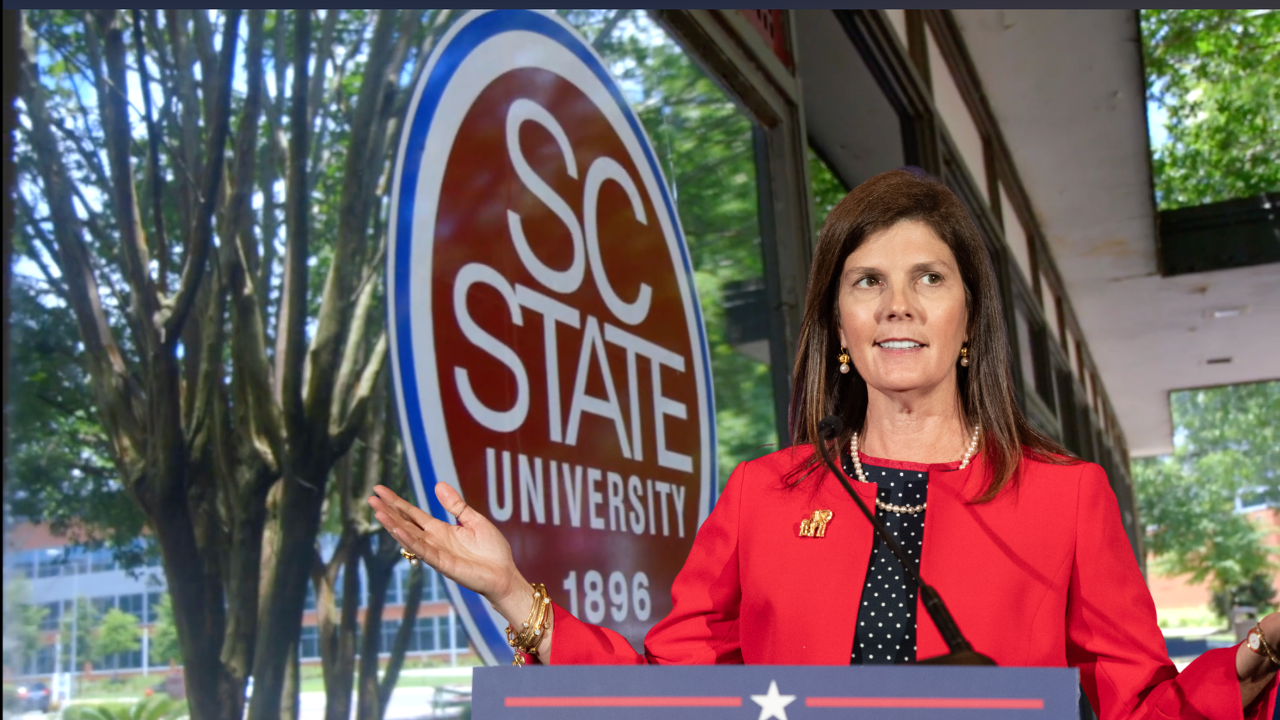
South Carolina State University is facing political backlash after canceling a planned commencement address by state Lt. Gov. Pamela Evette, a decision that has prompted some Republican lawmakers to call for the school’s funding to be cut, Fox News reported.
The university withdrew Evette’s invitation following student protests and what officials described as “credible safety threats.” In a statement, the school said the decision was made “out of an abundance of caution,” emphasizing concerns about maintaining a safe environment for students, staff and guests.
“We are grateful to Lt. Gov. Evette for her willingness to engage with our students and for her time and consideration in accepting the invitation.
Our intent was to provide students with a speaker whose professional journey could offer practical insight and inspiration as they prepare to enter the workforce. Out of an abundance of caution for safety and with careful consideration, the university has decided to move in a different direction for this Spring Commencement,” read a statement from SCSU president, Alexander Conyers.
Evette, a Republican who is also running for governor, told Fox News Digital that she was informed the cancellation stemmed from security concerns. She criticized the situation as part of a broader trend in which conservative speakers face opposition on college campuses. According to her, the invitation had been extended months earlier, and she had not publicly outlined her planned remarks.
Student demonstrations played a central role in the controversy. Protesters voiced opposition to Evette’s political positions, including her stance on diversity, equity and inclusion (DEI), abortion rights and her support for former President Donald Trump. Student leaders also argued that commencement speakers should focus on uplifting graduates rather than advancing political agendas.
University President Alexander Conyers said the final decision to rescind the invitation was his, stressing that the protests were not violent and rejecting characterizations of students as a “mob.”
In response, members of the South Carolina House Freedom Caucus condemned the university’s decision, calling it “shameful” and “inexcusable.” In a letter, several GOP lawmakers argued that if a statewide elected official could not safely speak on campus, the institution’s public funding should be reconsidered. They urged state budget writers to exclude funding for the university in the next appropriations cycle.
The dispute highlights ongoing national tensions over free speech, campus activism and political influence in higher education. While Republican leaders frame the issue as one of viewpoint discrimination, students and university officials maintain that safety and representation concerns guided the decision.
It remains unclear whether lawmakers will follow through on efforts to cut funding, but the situation has intensified debate over the balance between political expression and campus security at publicly funded institutions.