
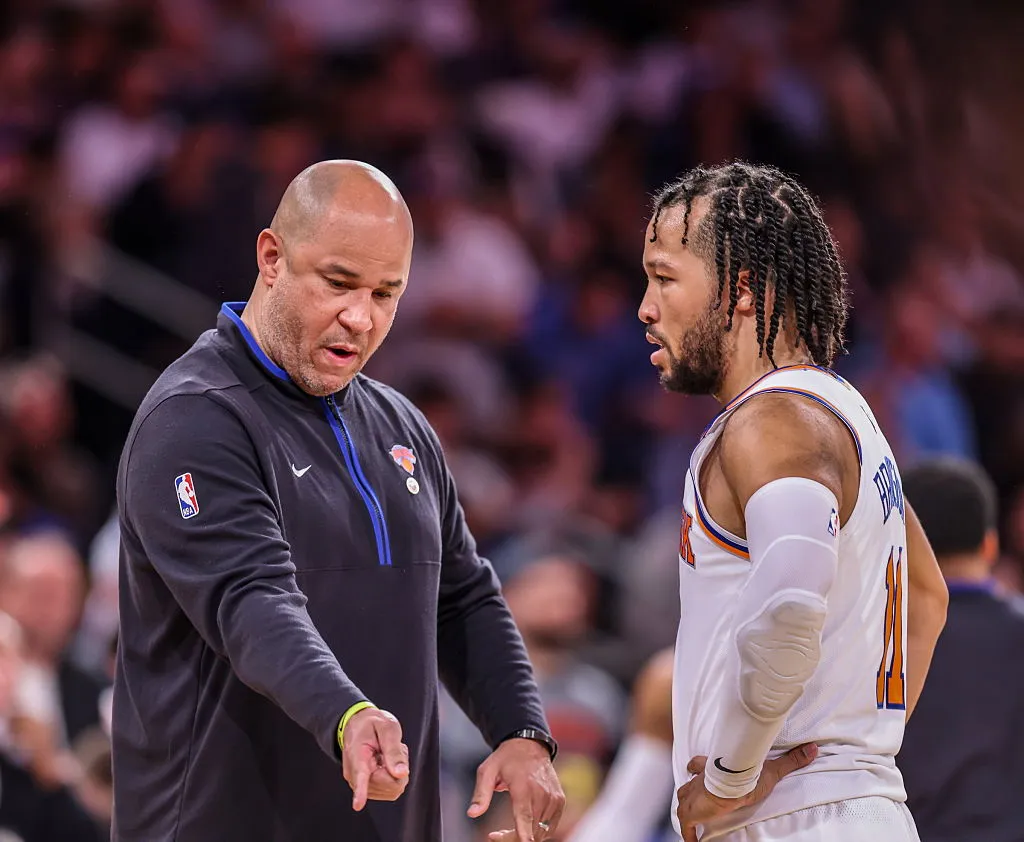
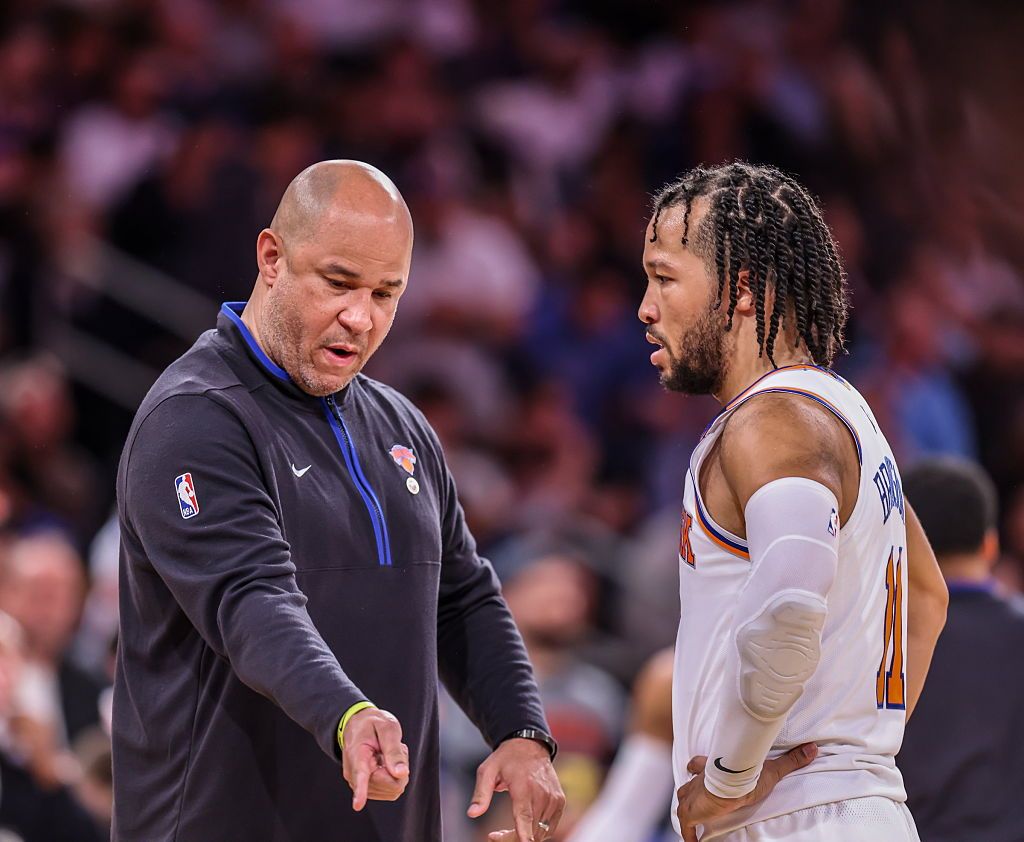
On the debut episode of Ultimate Dads: Unplugged, Justin Tatum, father of Boston Celtics superstar Jayson Tatum, joined Dwyane Wade Sr., father of Hall of Famer Dwyane Wade, LaVar Ball and Quenton Brown, father of former Celtics star Jaylen Brown, to discuss what they believe is the NBA’s effort to push Black fathers out of their sons’ lives once those sons become professional basketball players.
“The NBA, they try to act like they’re the fathers,” Justin Tatum reportedly said.
That’s a hell of an accusation. And while proving that the league has a coordinated policy of separating Black fathers from their sons would require more evidence, the complaint deserves serious consideration.
Because if there is one thing America has demonstrated a remarkable commitment to, it is the willingness to celebrate Black men’s accomplishments while minimizing the Black men who helped make those accomplishments possible.
The NBA is hardly innocent when it comes to that history.
In 1998, Sports Illustrated published a cover story titled “Where’s Daddy?” featuring a young boy holding a basketball beneath a headline that framed professional athletes’ children born outside marriage as an epidemic. The accompanying story focused on paternity disputes, child-support obligations, and the supposed epidemic of absentee fathers among professional athletes.
The magazine had a legitimate subject to examine. Wealthy men should be held accountable for their responsibilities to their children. But the framing helped cement a familiar narrative: Black male athletes were irresponsible fathers whose money, fame, and sexual appetites came at the expense of their children.
The story even acknowledged that athletes often paid child support once paternity was established. Yet the headline did not ask, “Who’s Paying for These Kids?” or “Who’s Raising These Extraordinary Athletes?”
Nope. It was “Where’s Daddy?”
The question itself was the indictment.
So much so that when D-Wade was leaving college, I only ever heard about his mother. I assumed that his father wasn’t in the picture, which couldn’t have been further from the truth. The actual story is that his mother and father divorced when he was a baby, and Wade would actually go to live with his dad––a pivotal move that changed the trajectory of his life, taking him from the South Side of Chicago to a better neighborhood––while his mother went to prison.
But that story, the one that shows the loving father using his son’s talents to keep him on the right track, isn’t the one the NBA promoted; they preferred the redemptive one about his mother turning her life around. I’m not saying her story isn’t worth telling or celebrating; hell, D-Wade even calls her his hero, but it clearly erases the Black dad who helped make her redemption a success.
Nearly three decades later, after Sports Illustrated asked, “Where’s Daddy,” Black fathers are still pushing back against the same assumptions.
And the funniest part is that the data make the stereotype even more ridiculous.
A National Center for Health Statistics report, based on a nationally representative survey of 3,928 fathers, found that Black fathers living with their children were at least as involved as other fathers across several measures, and often more involved.
Among fathers living with children under age 5, 70% of Black fathers reported bathing, dressing, or diapering their children daily, compared with 60% of white fathers and 45% of Hispanic fathers.
Among fathers living with school-age children, 41% of Black fathers reported helping with homework, compared with 28% of white fathers and 29% of Hispanic fathers.
The findings did not disappear when fathers lived separately from their children. Research has found that Black nonresident fathers can be just as involved as white fathers, and more involved than Hispanic fathers on several measures of time spent with children and parenting responsibilities.
These numbers deserve more attention than the tired statistics about Black children living in single-parent households. Household structure and father involvement are not interchangeable. A father can live apart from his children and remain a consistent, loving presence in their lives.
That distinction matters because the mythology surrounding Black fatherhood has never been just about parenting. It is about character. It suggests that Black men are uniquely incapable of responsibility, commitment, and nurturing.
Meanwhile, Black fathers are coaching their sons, attending their games, teaching them discipline, helping them navigate a country that too often views them as threats before it sees them as children.
Look at Jayson Tatum. His father helped coach and develop him long before the Celtics made him a franchise cornerstone. Look at Dwyane Wade, whose fatherhood has been central to his public life and whose family has navigated challenges that extend well beyond basketball. These men did not emerge from some magical NBA laboratory. They were raised by people who invested in them.
And LaVar Ball is owed an apology. At one point, he had two of his three sons (Lonzo, currently a free agent, and LaMelo, starting guard for the Minnesota Timberwolves) in the NBA, although everyone seemed to have an opinion on how he was raising them. And the funny thing is his involvement in his boys’ lives appears to have worked.
But that is the part that gets lost when the league presents its stars as corporate products, complete with carefully managed brands, sponsorships, and origin stories designed for public consumption.
The NBA did not teach these fathers how to love their children. The NBA did not get up early to drive them to school, teach them accountability, or help them understand the world. The league showed up when their sons were valuable enough to make them money.
That does not mean every Black father is present or every NBA executive is trying to undermine fatherhood. It means the league should not get to claim credit for the men it employs while treating their fathers as disposable once the money starts rolling in.
And there is something particularly insulting about this erasure in a league whose cultural and commercial power is inseparable from Black Americans.
The NBA sells Black athletic brilliance, Black style, Black slang and Black swagger to a global audience. Its stars are among the most recognizable and influential people on the planet. But the ordinary, unglamorous work of Black fatherhood — the sacrifices, the discipline, the difficult conversations — rarely gets the same attention.
That work does not fit neatly into a marketing campaign. It cannot be packaged as easily as a sneaker. And it certainly does not support the old, convenient story about the absent Black father.
Black men are not perfect fathers. No group of men is. But the idea that Black fatherhood is defined by absence is a lie that statistics have repeatedly challenged and Black families have spent generations disproving.
The NBA can celebrate its stars. It can sell their jerseys, build its broadcasts around their personalities, and make billions from their labor.
But it should never pretend that the league created these men.
Before there was an NBA contract, there was a father. And before the league starts taking credit for Black excellence, it might want to acknowledge the Black fathers who helped build it.
SEE ALSO:
The Lakers Look More Like The Country Club Than Showtime [Op-Ed]
Kelly Clarkson’s Fake Bird Fiasco Is The Whitest Thing On The Internet