
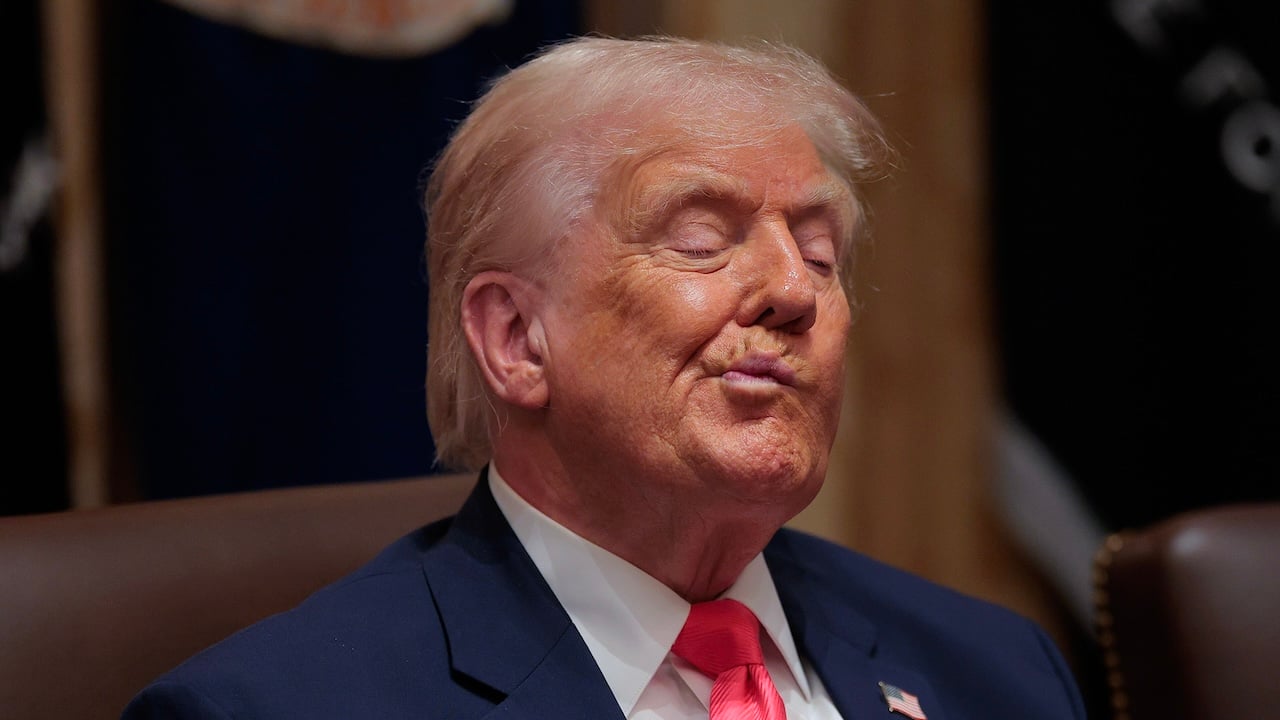
Following President Trump’s sweeping executive orders in January, which called for the removal of diversity, equity, and inclusion practices, there may be an unintended backlash to the policy, especially on college campuses.
While much of the president’s feelings regarding DEI pointed toward race when it came to college admissions, higher education and admissions experts suggest the ban on DEI is likely to affect another underrepresented group of college applicants: men, and in particular, White men.
At Brown University, according to numbers cited by The Washington Post, the incoming first-year class consisted of 7 percent men, compared to 4.4 percent women. Schools have attempted to keep incoming classes evenly balanced between genders, despite a growing number of men opting out of attending college. According to data, 40 percent more women than men enroll in higher education, which means men have a much easier chance of being admitted.
That may no longer be the case.
“This drips with irony,” Ted Mitchell, the president of the American Council on Education, or ACE, said. ACE is the largest association of universities and colleges in the country.
While Mitchell expects colleges and universities to end any consideration of gender in admission, he points out “the idea of males, including White males, being at the short end of the stick all of a sudden would be a truly ironic outcome.”
Other entities have followed Trump’s policy, including corporations such as AT&T, T-Mobile, and Verizon. However, elite institutions have so far been slow to comply with the Compact for Academic Excellence in Higher Education to receive prioritization for federal funding. The policy requests that schools and universities implement and adopt policy changes, including ending affirmative action, freezing tuition, and capping international enrollment at 15 percent, among other measures.
The Trump administration has made it a priority to include gender among the items it says schools should not review for admissions or hiring purposes. They also do not want race, ethnicity, nationality, one’s political views, sexual orientation, gender identity or religious views to be considered.
“The racial parts have gotten a lot more attention, but I know from having spoken with practitioners who work in college admissions, they have read very clearly that it says ‘race and gender’ in the administration’s pronouncements about ending preferences in admission,” Shaun Harper, founder and chief research scientist at the University of Southern California’s Race and Equity Center said.
Harper added, “What I think they don’t understand is that taking away the ability of colleges and universities to balance the gender composition of their incoming classes will ultimately have an impact on the college enrollment rates of White males. It is likely to impact them the most, as a matter of fact.”
The fallout from Trump’s policy regarding DEI has been felt across the country. A University of Virginia president resigned earlier this year due to pressure from the administration and some of the president’s once ardent supporters have criticized him on the matter. In April, Candace Owens found herself rooting for Harvard University over Trump, feeling that the administration had overstepped its bounds with its attacks on DEI.
“I never thought that I would see a day where I would be rooting for a university above Donald J. Trump and his administration,” she said. “But I don’t recognize this administration right now. I don’t recognize what’s happening. I have a theory. I do.”
She added, “Going after college universities, trying to suppress speech while you’re telling [us] that you’re not suppressing speech while pretending that you’re fighting DEI. It’s so messy. It’s so obvious. Everyone knows what you’re doing.”