
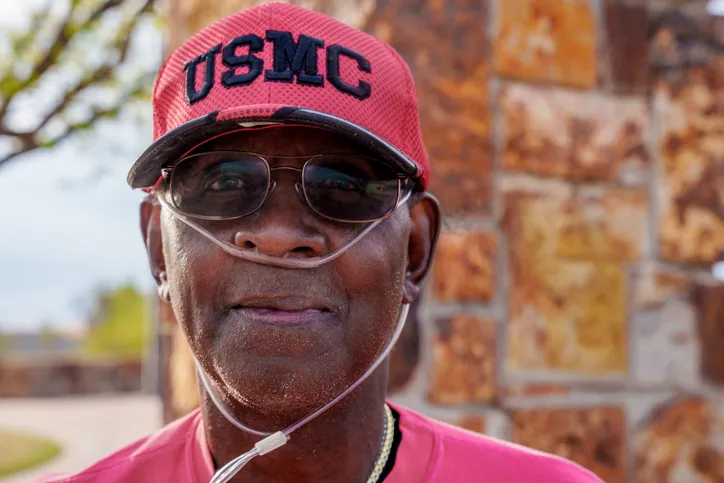
Every Veterans Day, the civilian world likes to pause and say to veterans, “Thank you for your service,” as a way of wrapping them in a warm blanket of public appreciation for their willingness to risk their lives for this country.
But for Black veterans, that gratitude often stops at the door of their local Veterans Affairs office constructed to serve them after their military career has drawn to a close. For generations, the journey home and into retirement for Black service members has required navigating a dual labyrinth of a system that routinely denies their physical and psychological injuries, alongside an external job market that erects additional barriers in accommodating them.
Decades of data pulled into the public eye through rigorous legal battles and community advocacy have revealed that for more than two decades, the Department of Veterans Affairs has denied disability claims from Black veterans at rates consistently higher than their non-Black peers. In fact, according to a report by the U.S. Government Accountability Office, Black veterans face the lowest approval rate of all ethnic or racial groups, at just 61% compared to 75% for white veterans.
This broader trend of disparate treatment can be seen most clearly in the evaluation of mental health claims. Among veteran populations, post-traumatic stress disorder remains one of the most common psychological wounds of modern warfare, yet internal agency analyses reveal that Black veterans routinely face the lowest grant rates for PTSD claims. Black veterans are approved around 43% of the time, compared to nearly 60% for non-Black vets.
Evaluating a psychological wound involves significant subjective interpretation, allowing unexamined personal biases to shape what is essentially a judgment call regarding a veteran’s internal mind state and their capacity to function despite it.
This trend of lopsided judgment based on race also extends to physical ailments where the medical evidence is measurable and far more conclusive and concrete than mental health conditions. Disability approval rates for Black male veterans suffering from hearing loss were just 23%, but for white men, it was 45%.
Approval rate gaps decrease the more visibly or medically undeniable the physical injury. Conditions like limited motion of knees or ankles and physical scarring all have less than a 6% difference in approval ratings between races, and all three conditions enjoy approval rates higher than 55% for both groups.
This pattern reflects a broader experience within healthcare where Black pain and discomfort are routinely dismissed, minimized, or treated with skepticism by medical teams and healthcare providers. From public emergency rooms to specialized military clinics, clinical providers frequently assume that Black patients possess a higher threshold for suffering and should endure their physical and mental trauma without intervention or support.
For Black veterans, these discrepancies strip away vital economic security and healthcare access, forcing them to shoulder the lifelong costs of their service without the compensation and support promised to their peers. The disparities mean Black veterans are denied access to critical resources specific to their injuries, as receiving a formal disability rating is a critical step in unlocking a vast ecosystem of support, including specialized vocational training, targeted job placement programs, and tailored educational pathways.
This pattern of being turned away at government offices follows Black veterans into the private sector, making their transition back into the civilian workforce even harder. While a military background often gives white job seekers a hiring advantage, extensive labor data shows that Black candidates do not receive that same baseline lift from recruiters. Instead, research indicates that over 40% of non-white veterans report that racial bias directly damages their career advancement and blocks them from corporate promotional pipelines.
Once inside these companies, the transition from barracks to the boardroom hits a secondary wall as corporate cultures project the pervasive caricature of the volatile or aggressive service member onto Black candidates. When mixed with systemic workplace discrimination, this trope can create a compounding penalty that regularly routes qualified Black job seekers away from executive positions and pushes them into lower-wage work. By treating them as liabilities rather than assets, the civilian job market often locks Black veterans out of the economic mobility they earned when they were on active duty.
This contemporary denial of benefits and workplace opportunity is not a modern anomaly, but rather the continuation of a century-long pattern where the American public readily accepts the sacrifices of Black service members while systematically withholding the material rewards of their sacrifices to protect this country.
Following the First World War, Black veterans returning home were denied medical care and other assistance. During the Red Summer, white mobs targeted Black men in uniform because their military service was viewed as a direct threat to domestic segregation rather than a badge of honor. Black veterans were encouraged to refrain from wearing military uniforms so as not to become easy targets. Those who proudly donned their uniforms were frequently assaulted and at least a dozen were lynched.
Decades later, following the Second World War, Black veterans were often denied the housing and educational loans that they were owed through the GI Bill. Data shows that out of 67,000 mortgages guaranteed by the GI Bill in the New York and northern New Jersey suburbs, fewer than 100 went to Black veterans.
In the Jim Crow South, over 95% of Black veterans were funneled to underfunded Black colleges. A good percentage of Black veterans were dissuaded from college altogether and into low-wage vocational programs, or they were denied admission. That denial of benefits established a multi-generational wealth gap within the veteran community that still persists today.
Supporting Black veterans means demanding the removal of the bureaucratic barriers that block equal access to economic security. Black veterans have paid the heavy price of willingly risking their lives on behalf of all Americans and deserve more than the customary, symbolic pageantry that comes with Veterans Day. True equity can’t be achieved through empty rhetoric or hollow applause. The willingness of veterans to make the ultimate sacrifice for this country should be met with the full dignity, resources, and respect they’ve earned many times over through their unwavering dedication and service. Until the nation honors its debt to these heroes in material terms, public gratitude will remain an unfulfilled promise.
SEE ALSO:
Black Veterans Served Their Country With Honor. America Doesn’t Act Like It