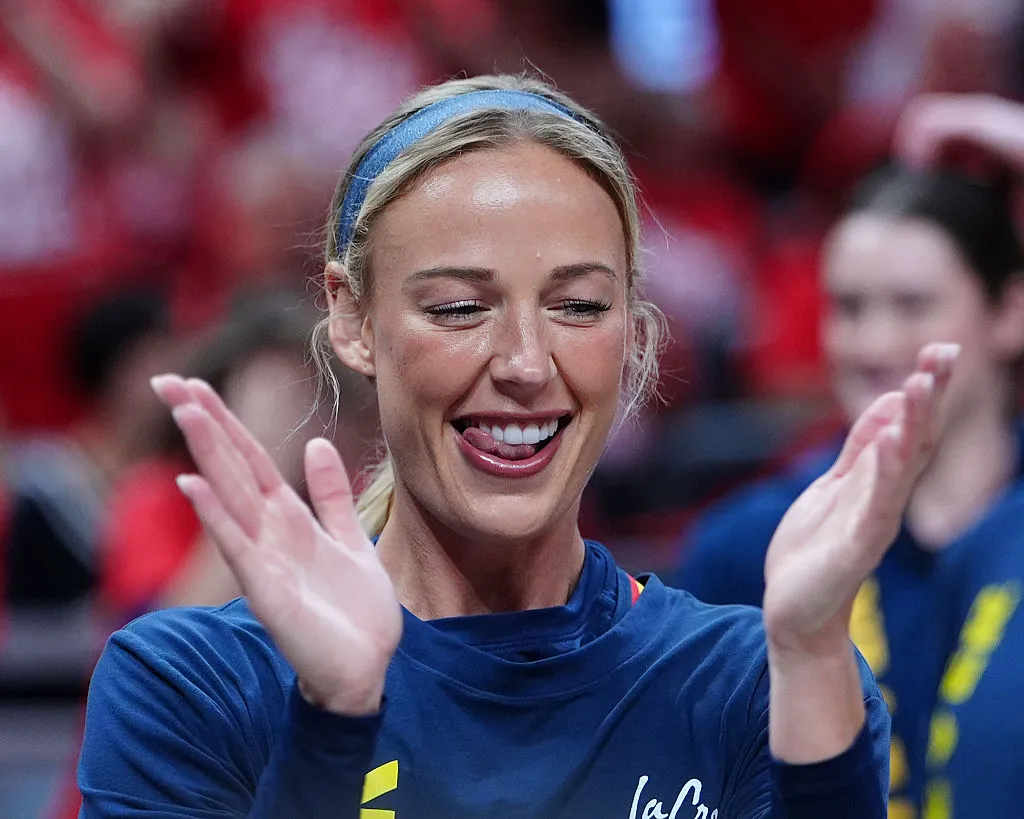

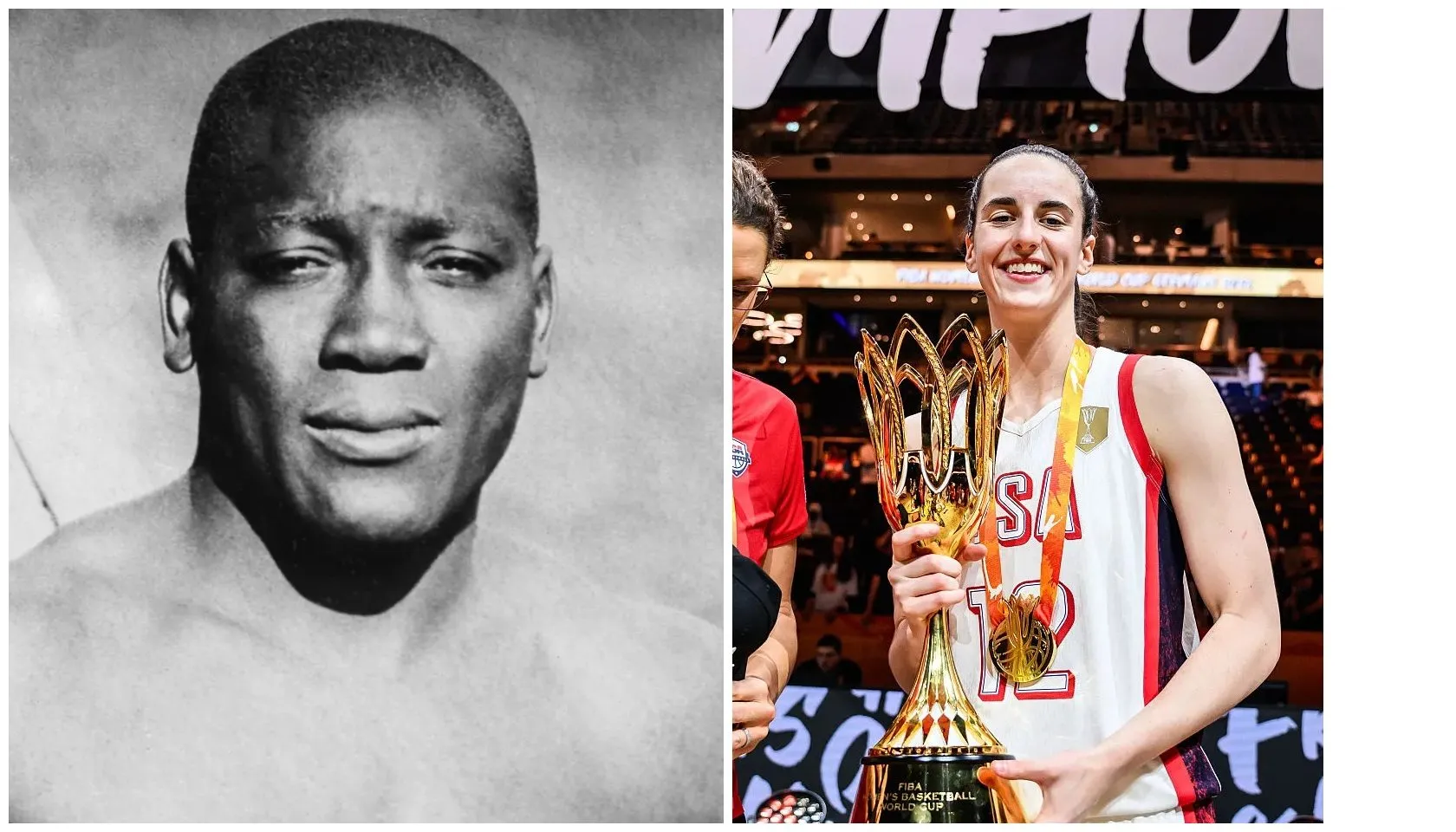
Since all Caitlin Clark supporters want to talk about these days are arena attendance records and ticket sales, I figure now is as good a time as any to talk about boxing. Yes, the sport of boxing. Stick with me for a moment while I explain.
As the WNBA postseason moves forward without Clark and the Indiana Fever, the loudest corners of their fanbase have become fascinated by something peculiar. Ticket sales and tv ratings for a WNBA postseason their team exited in the first round.
Generally, when a team with high championship hopes and a player like Clark, who has been hyped as a generational savior who supporters insist is already the greatest of all time, suffers a swift postseason collapse, fans and analysts head immediately into deep dives dissecting the roster. They analyze what went terribly wrong, debate coaching adjustments, and argue about what players like Clark should do during the offseason to improve their game.
Instead, sports commentators and Fever fans have spent an inordinate amount of energy obsessing over Indiana Fever television ratings and stadium attendance numbers, pushing the bizarre and unfounded narrative that the WNBA is worthless without the Fever in the playoffs.
Even after Angel Reese and the Atlanta Dream sold out the State Farm Arena for a Game 3 WNBA Finals matchup that didn’t include Clark, the fixation has remained. Game 1 of this Finals series broke records, becoming the most-watched WNBA Finals game in the league’s thirty-year history.
In many ways, this sudden pivot from Clark’s lackluster championship run to analyzing tv and arena metrics is a clear concession of defeat. After all, her fanbase possesses a relentless penchant for going to great lengths to find a win somewhere. When the Fever or Clark fall short, they create a protective shield around her chronic underperformance by targeting other players and teams.
Rather than crediting Reese and the Atlanta Dream for their spectacular talent and performance in games two and three of the Finals, Clark fans have resorted to flooding comment sections with claims the Finals series is rigged and that Valkyries’ head coach Natalie Nakase and her team are losing on purpose.
Clark fans and basketball commentators spent much of the 2026 season cheering on conservative politicians who successfully bullied the WNBA into instituting a special soft whistle for the Indiana Fever guard. The combination of political demands, relentless, unearned media glazing, and vicious fan attacks on anyone who dared point out her flaws reduced her season to a basketball version of a Weekend at Bernie’s production, where she was propped up by any means necessary.
Rather than admitting she hasn’t proven she has the skill or talent to live up to their championship-level expectations, supporters have logged out of the thrilling basketball playoffs to focus narrowly on tracking ticket stubs for other franchises.
Perhaps this is a sign that Clark’s fanbase is slowly working their way through one of the most important steps of grief: denial. Maybe they’re starting to accept that their overhyped great white hope is unlikely to live up to their expectations so they are shifting to focus on what her legacy will be.
They seem to be inching closer to settling for a Clark basketball legacy built on drawing a massive, temporary audience whose investment in women’s basketball in general and the WNBA in particular is contingent upon Clark’s presence.
Their focus on arena attendance and TV ratings broadcasts their ongoing dedication to flooding the gates with capital to simulate a triumph in the stands that their contender has so far proven unable to secure on the hardwood.
This protective choreography is a defensive retreat that history has seen before. It traces back to the turn of the twentieth century, an era when segregation was codified by law, and the sports world served as a critical testing ground for racial hierarchy.
More than a century ago, heavyweight boxing was the pinnacle of masculinity, and white champions routinely refused to face Black challengers. In the Jim Crow era, boxing was segregated, and white fighters held full control over the mainstream championship path while Black boxers were forced to compete in a separate circuit for minor purses and zero media recognition. Segregation maintained the illusion of white physical dominance in the sport.
In 1908, a Black boxer by the name of Jack Johnson shattered that illusion by capturing the world heavyweight title from boxer Tommy Burns. He unseated Burns and the white establishment’s strong grip on boxing by matching a devastating power with a defensive wizardry so brutal that police intervened just as Johnson prepared to deliver a knockout. Police stopped the fight to spare Burns from further humiliation, ordering the camera crews to stop filming. Unable to digest the loss, white fans later claimed that Burns hadn’t held the heavyweight title to begin with.
Johnson occupied his newfound throne with an unapologetic swagger that infuriated white boxing fans and aficionados. He taunted his opponents, smiling directly at hostile crowds, and openly mocked the respectability politics of the sporting world.
Johnson’s success against Burns was met by a quest among the white establishment to find a white fighter who could beat him and put him in his place. Not willing to concede to the reality that Johnson was proving himself the best boxer in the country, promoters and the media launched a desperately, heavily funded campaign to drag former boxing champion Jim Jeffries off his alfalfa farm in California to act as their racial proxy.
Jeffries had been retired for six years, after enjoying a lengthy reign as the world heavyweight champion. He was considered the top fighter in the world, never once falling to the canvas.
Before retiring, Jeffries had once stated, “When there are no white men left to fight, I will quit the business.”
Major newspaper columnists wrote relentless front-page pleas demanding Jeffries’ return, framing his comeback as a mandatory racial duty to restore order to the country and the sport of boxing.
Prominent editors printed ultimatums telling Jeffries that the future welfare of his people rested entirely on his shoulders. They insisted that he was the only man capable of “wiping the smile off Johnson’s face.”
The white public didn’t care that Jeffries weighed more than 300 pounds, was out of shape, and was comfortable with his post-retirement life. For them, Jeffries represented the reclamation of white dominance, and his return to the ring would give them an opportunity to lean into economic power and the belief that their investment in him alone could will him to victory.
Promoter Tex Rickard traveled to Jeffries’ farm, outmaneuvering competing bids by offering him more than a hundred thousand dollars in cash. Alas, Jeffries agreed to step in the ring with Johnson.
The overengineered financial structure created a massive spectacle, as the white establishment eagerly used capital in their attempts to guarantee a victory for their chosen proxy when they could no longer count on athletic superiority.
The Chicago Tribune framed the July 4 bout between Johnson and Jeffries as “A contest between the white man’s hope and the Black man’s peril.” Promoters spent unprecedented sums to construct a brand-new, 22,000-seat arena in Reno, Nevada, a temporary wooden structure built with the sole purpose of hosting this bout. The white public flooded the gates and shattered ticket records, filling the makeshift arena with so many attendees that it more than matched the 15,000-person population of the city.
On that summer day, Johnson completely dismantled the overhyped contender, shattering the financial illusion of white supremacy on the canvas. The outcome triggered race riots in Los Angeles, D.C., Columbus, and Philadelphia. A white man on a Houston streetcar slit a Black man’s throat after cheering for Johnson.
Media outlets worked overtime to remind Black people that their social position remained unchanged despite Johnson’s dominance. A 1910 Los Angeles Times editorial warned Black readers, “Do not point your nose too high. Do not swell your chest too much. Do not boast too loudly. Do not get puffed up… Your place in the world is just what it was. You are on no higher place, deserve no new consideration, and will get none.”
The white establishment attempted to erase the event from public consciousness. A political movement quickly formed to ban professional boxing nationwide, and two years after the fight, Congress enacted a federal law that barred the interstate shipment of fight films.
That effort to legislate away an athletic defeat is being replicated today, with congressional Republicans using the WNBA to try to dismantle Title IX.
In both eras, the white establishment used financial dominance in an attempt to humble Black athletes and remind Black people to stay in their places. Ultimately, breaking attendance records builds a hollow wave of invincibility. In sport, the court and the ring are where raw talent and execution are the only metrics that matter.
History remembers Jack Johnson for his athletic excellence, while Jim Jeffries remains a footnote defined by white anxiety. A similar fate awaits Caitlin Clark and her supporters, who show up in mass numbers out of a spiteful need to humble the Black women who built the WNBA. Using artificially inflated metrics to declare athletic supremacy is a farce, and when the collective temper tantrum ends when Clark retires, her audience will evaporate just as quickly as Jeffries’ did.
After all is said and done, one harsh reality remains. No amount of corporate overinvestment or arena attendance records can buy Caitlin Clark talent as a player or be used transactionally to deliver a championship. Those metrics must be earned through skill, grit, and performance on the hardwood.
The ultimate joke and irony of this modern crusade is that unless Clark makes marked improvements in her game, her spiteful fanbase will continue to hand itself a record-breaking number of front-row seats at home and in arenas, to watch their great white hope get dismantled as their illusions of corporate-bought greatness and white supremacy shatter right before their eyes.
SEE ALSO:
Angel Reese Is The Basketball Phenom, Superstar We’ve Been Waiting For